

- 53+ Reviews on Google
- Multilingual Team
- Registered NDIS Provider #4050126032
What Is SIL NDIS? Understanding Supported Independent Living in Melbourne
SIL (Supported Independent Living) is NDIS funding that pays for support workers who help people with disabilities with daily tasks so they can live more independently at home. This guide will help you understand what is SIL NDIS, how it works, and whether it is right for you.
“Not sure if you need SIL or SDA? Talk to our Melbourne team!”


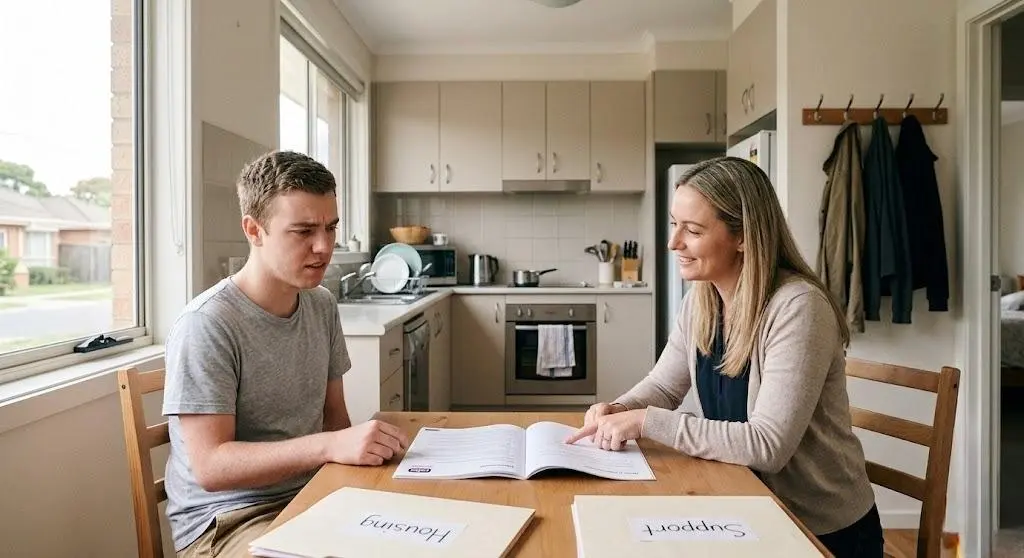
SIL Meaning in NDIS: What Does Supported Independent Living Cover?
What is SIL NDIS? SIL funding covers the cost of your support workers. These trained professionals come to your home and help with daily tasks. Depending on your needs, support can be for a few hours a day or available all day and night, including overnight.
Here’s what NDIS SIL funding generally covers:
- Personal Care: Help with showering, getting dressed, and your daily routine at your own pace.
- Meal Planning and Cooking: Support with planning meals, grocery shopping, and preparing food you enjoy.
- Household Tasks: Assistance with cleaning, laundry, and keeping your home comfortable.
- Medication and Appointments: Reminders to take medication and support attending medical appointments.
- Building Daily Living Skills: Helping you become more independent over time, not just doing tasks for you.
- Overnight and Sleepover Support: A support worker available during the night for safety and care.
- Transport to Activities: Help getting to appointments, social outings, and community activities.
Behaviour and Emotional Support: Trained support workers who follow your behaviour plan and understand your needs.
“Not Sure What Your SIL Funding Covers? We Can Help”
Who Is Supported Independent Living NDIS For? Understanding Eligibility
Supported Independent Living services in Melbourne are not for every NDIS participant. It is meant for people who need a significant level of help every day, and whose needs are unlikely to change over time. The NDIS considers a few key things when deciding if SIL is right for you.
Your Daily Support Needs
They assess how much help you need throughout the day, including personal care, meals, medication, and staying safe at home. It is not about your diagnosis, but about what your day actually looks like and where you need support.
Generally, the NDIS looks for a need of at least eight hours of active support per day, plus some support at other times. This does not mean someone is with you for eight hours straight. Instead, it is the total support you receive throughout the day that adds up to this amount.
If you rely on family or informal carers and that arrangement is not sustainable long term, that is important. The NDIS wants to see that your current setup is not meeting your needs safely or consistently.
Whether Other Options Would Suit You Better
SIL is not the only home and living support available. The NDIS will also consider whether an Individualised Living Option or drop-in personal care might be a better fit for your situation before approving an SIL.

What Supported Independent Living Does Not Cover?
Knowing what SIL does not cover is just as important as knowing what it does. Many participants are surprised to learn that SIL funding does not pay for rent, groceries, utility bills, or everyday living expenses. Those costs come from your Disability Support Pension or other personal income.
SIL also does not cover home modifications, assistive technology, support at your workplace or school, or holiday and travel expenses. These are either covered by a different part of your NDIS plan or are your own responsibility.
Knowing this ahead of time helps you plan your finances and avoid surprises when you move into a SIL arrangement.
NDIS SIL Explained: How the Roster of Care Works
To understand NDIS SIL, it helps to know how the funding gets approved, which starts with the Roster of Care.
Unlike most NDIS supports, SIL funding does not come with a fixed dollar amount in your plan. Once your NDIS plan identifies that you need SIL, your chosen provider works with you and your support coordinator to build a Roster of Care. This is a detailed document that maps out what a typical week of support looks like for you, what tasks, when, and for how long. The provider submits this to the NDIA, which reviews and approves the funding based on your actual assessed needs, not a flat rate.
The process usually involves a functional capacity assessment from an occupational therapist, your support coordinator pulling together the right evidence, and the NDIA reviewing the Roster of Care before confirming any funding. It can take a few months, so having the right documentation in place from the start makes things move faster.
The NDIS also uses support ratios to decide how many support workers are needed. Common ratios include one support worker for one participant for higher needs, or one worker supporting two or three participants in a shared house. Your ratio is based on your individual assessed needs.

SIL vs SDA: What Is the Difference in NDIS?
| SIL and SDA often appear together, which leads people to assume they are the same or that one includes the other. They do not. | |
| SIL (Supported Independent Living) | SDA (Specialist Disability Accommodation) |
|---|---|
| NDIS Supported Independent Living (SIL) is the support. | SDA, or Specialist Disability Accommodation, is the home. |
| SIL funding covers the support workers who help you inside that home or any home, whether standard or specialist. |
SDA funding covers the physical property itself, a home that has been purpose-built or specially modified for people with extreme functional impairment or very high support needs.
Features like ceiling hoists, wider doorways, accessible bathrooms, and reinforced walls are made possible by SDA funding. |
| Many participants have both. Some only need SIL. Very few, about 6% of all NDIS participants, qualify for SDA. They are funded, approved, and managed separately. Having one does not give you the other. | |
What Is the Difference Between SIL and ILO?
SIL disability support is structured, consistent, and built around a fixed Roster of Care which is what makes it different from the more flexible ILO model. SIL is for people who need a high level of daily support, often around the clock, with professional support workers available in a shared or individual home.
ILO is more flexible and better suited to people with lower support needs who want more control over how their support is set up. ILO packages can include informal support from family or friends alongside paid supports, and the living arrangement can be more varied, such as living with a host family, a friend, or alone with occasional support.
If you need someone there consistently throughout the day and overnight, SIL is likely the right option. If you are fairly independent but need some structured support a few hours a day, ILO might be a better fit. A support coordinator can help you determine which one best matches your situation.
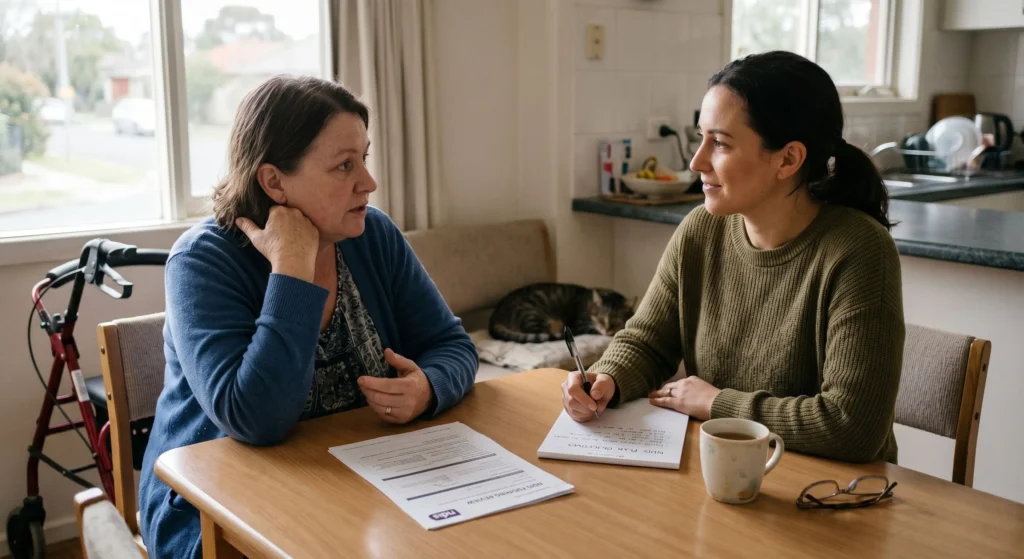

What Type of Home Can You Live in Under SIL?
SIL is not tied to one type of property. Participants can receive SIL support in a shared house with other NDIS participants, a standard rental property, a home they own, or an SDA-approved specialist property. The support comes to you and is not attached to a specific building.
Most SIL participants live in shared homes because sharing support costs between housemates makes the funding go further. In a shared home, support workers help multiple participants, which the NDIA considers when approving the Roster of Care.
However, if your support needs are high enough that sharing is not suitable, individual SIL arrangements are possible. This is considered on a case-by-case basis during the assessment process.
Get Started with Supported Independent Living in Melbourne
Hilda Care is a registered SIL provider in Melbourne. When you come to us, we sit down with you to review your NDIS plan. We work with your support coordinator to make sure your Roster of Care matches your real life. Our experts match you with support workers who understand your routine and personality. If your needs change, we adjust.
We cover all areas of Melbourne, including the CBD, inner suburbs, and the northern, western, eastern, and southern suburbs.
If you are unsure where to start or whether you qualify, getting the right guidance early can save you months in the approval process.
“Book a Free SIL Consultation”

FAQs About SIL vs SDA
Do I still have to pay rent if I am in a SIL home?
Yes. SIL funding pays for the support workers who help you at home, but it does not cover rent, groceries, electricity, or other everyday living costs. Your rent usually comes from your Disability Support Pension or other personal income.
Can I change my SIL provider if things are not working out?
Yes, you can. Choice and control over who supports you are among the foundations of the NDIS. If you are unhappy with your current SIL provider, whether it is the workers, the communication, or the overall fit, you have the right to move to a different one. The time it takes to transition depends on whether you are staying in the same home or moving to a new one.
Can I choose who I live with?
Yes. A good SIL provider will take your preferences, personality, and routine seriously before placing you with housemates. At Hilda Care, we arrange meet-and-greets before any decisions are made, so everyone has a chance to see if they are a good fit.
How long does it take to get SIL approved?
It can take a few months. The process involves getting a functional capacity assessment from an occupational therapist, building a Roster of Care with your provider, and then waiting for the NDIA to review and approve the funding. Having strong, detailed evidence from the start helps things move faster.
Can I receive SIL if I want to live on my own rather than in a shared house?
Yes, in some cases. Shared living is more common under SIL because support costs can be split among housemates, making the funding go further. But if your level of need clearly requires individual support, the NDIA can approve SIL for someone living alone.
This is considered on a case-by-case basis, so it is worth talking with your support coordinator to see whether it might apply to you.
“Still Have Questions? Our SIL Team Is Happy to Help”