

- 53+ Reviews on Google
- Multilingual Team
- Registered NDIS Provider #4050126032
SIL vs SDA NDIS: What Is the Difference
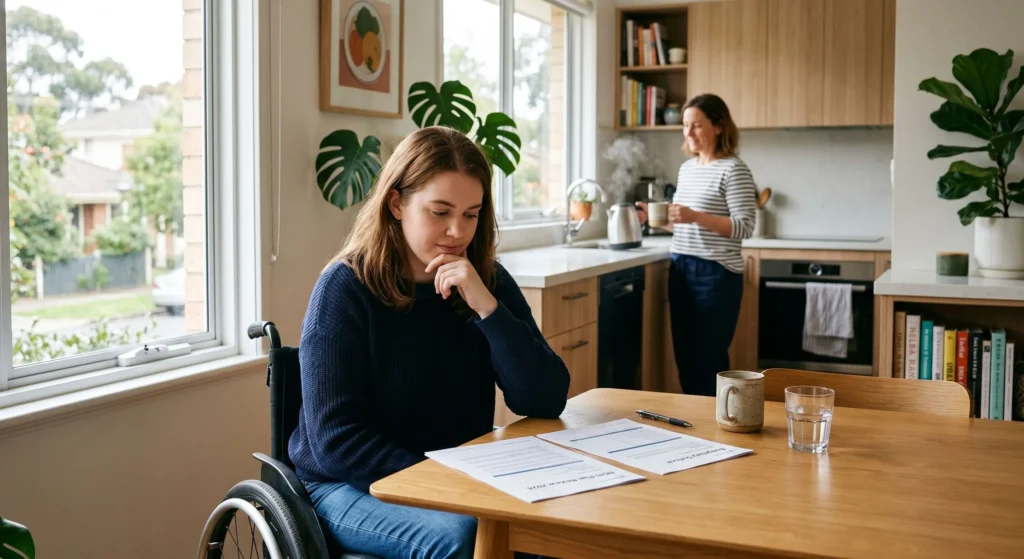
SIL and SDA are both commonly used in NDIS housing, but people often mix them up. The main difference is that SIL covers the support workers who help you at home, while SDA covers the property itself. These are two separate types of NDIS funding, and each is assessed independently. Understanding SIL vs SDA helps you choose the right NDIS support.
“Not sure if you need SIL or SDA? Talk to our Melbourne team!”

Difference Between SIL and SDA
Let’s understand the difference between SIL and SDA.
SIL
Supported Independent Living
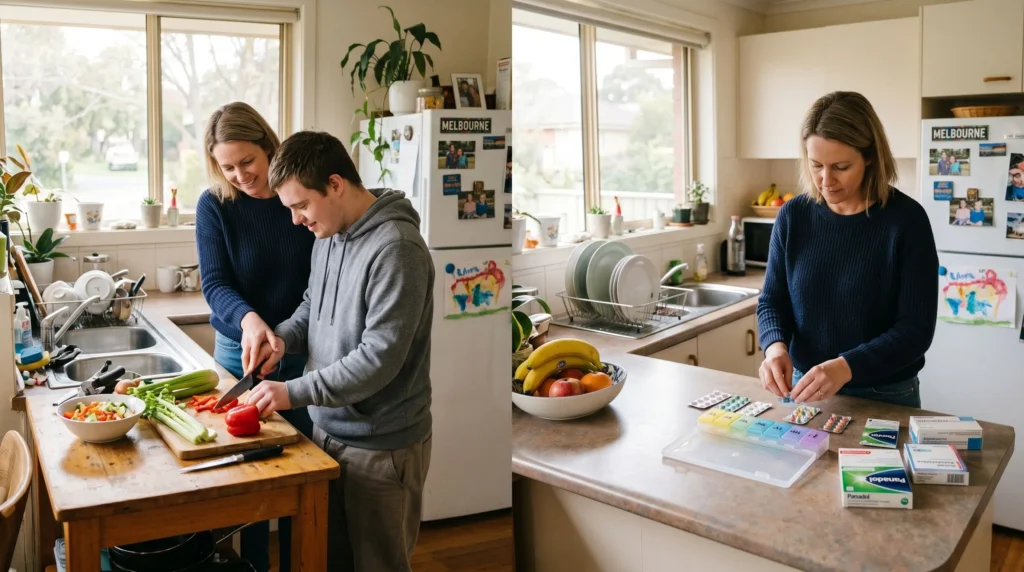
SIL stands for Supported Independent Living. It pays for the people who help you at home. Support workers can help with personal care, meals, taking medication, household chores, and your daily routines.
SDA
SDA stands for Specialist Disability Accommodation. It pays for the property itself. This could be a home that is specially built or modified to include features such as ceiling hoists, wider doors, accessible bathrooms, or stronger walls for people who cannot safely live in a regular home.
NDIS SIL Meaning: What It Covers
SIL funding from the NDIS covers your support workers and the daily help they provide. This can include personal care, cooking, cleaning, reminders to take medication, overnight support, transport to activities, and help building skills. It does not pay for rent, groceries, or utility bills.
You can get SIL in a regular rental home, a shared house, a home you own, or even in an SDA property. The support is for you, not for a specific type of building.
For a full breakdown of who is eligible, how the Roster of Care works, and what SIL covers, visit our What Is SIL NDIS
SDA Meaning NDIS: What It Covers and Who Qualifies
SDA funding pays for the property itself. This includes the cost of building or changing a home for people with extreme functional impairment or very high support needs. SDA homes are built in four design categories:
- Improved Liveability for people with sensory, intellectual, or cognitive impairments. Features such as luminance contrast and tactile materials help with navigation and safety.
- Fully Accessible for people with significant physical impairment. Wide passages, accessible countertops, and step-free entry throughout.
- High Physical Support for people needing very high physical support, with structural provisions for ceiling hoists, emergency power, and assistive technology.
- Robust for people with complex behaviours or psychosocial needs, built with durable materials to reduce injury risk.
Qualifying for SDA is difficult, and according to NDIS data, only about 6% of participants meet the criteria. You must demonstrate extreme functional impairment or very high support needs through detailed assessments, usually including a housing report from an occupational therapist. You also need to show that standard housing cannot safely meet your needs, even with modifications.
Even if you get SDA, you still have to pay a Reasonable Rent Contribution. This is usually about 25% of your Disability Support Pension, plus your regular living costs.

SDA vs SIL NDIS Comparison
| Category | SIL | SDA |
|---|---|---|
| What does it fund? | Support workers and daily assistance | The physical home or property |
| Who is it for? | Participants needing significant daily support | Participants with extreme functional impairment or very high support needs |
| Does it cover rent? | No | Partially. A rent contribution still applies |
| How many qualify? | More widely available | Around 6% of NDIS participants |
| Can you have both? | Yes | Yes |
| Does one include the other? | No. Funded separately | No. Funded separately |
The last one is the most important. If you move into an SDA home, your daily support is not automatically funded. SIL does not pay for housing costs. These two types of funding are completely separate.
SDA vs SIL: Can You Have Both?
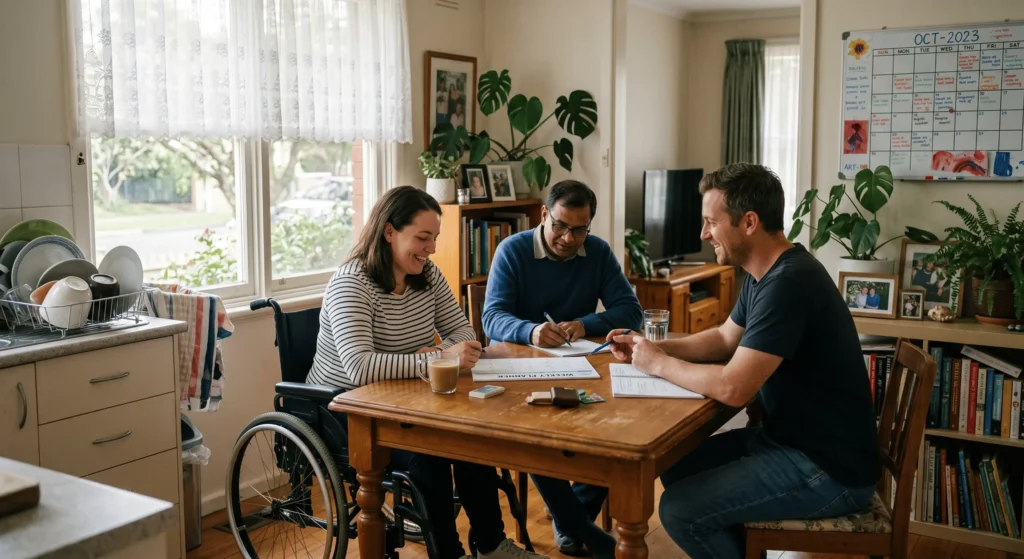
Yes, and many people have both. If you need a lot of daily support and a home that fits your physical needs, the NDIS can fund both separately in your plan.
SDA pays for the special property, and SIL pays for the support workers who help you there. Both are listed separately in your plan and managed independently. This means you can change your SIL provider in Melbourne without moving out of your SDA home. If your housing changes, your SIL funding does not automatically change.
People often ask if qualifying for one means you get the other. The answer is no. Each is assessed separately, with its own rules.
SIL Eligibility and SDA Eligibility Key Differences
Knowing the difference between SIL and SDA eligibility helps you decide which to discuss with your support coordinator first.
Whether you qualify for SIL depends on how much daily support you need. The NDIA considers whether you need at least 8 hours of active support each day, whether your current living situation works, and whether less-intensive options, such as ILO or drop-in care, would be sufficient. Your diagnosis alone does not qualify you. What matters is your actual daily needs.
It is much harder to get SDA. You must have extreme functional impairment, which means your disability makes it very hard to move, take care of yourself, or manage daily life, even with assistive technology. You also need very high support, like one-on-one help for most of the day, and family or friends cannot provide it all the time. The NDIA will also check if home changes could help before approving SDA.
SDA vs SIL: What Each One Costs You
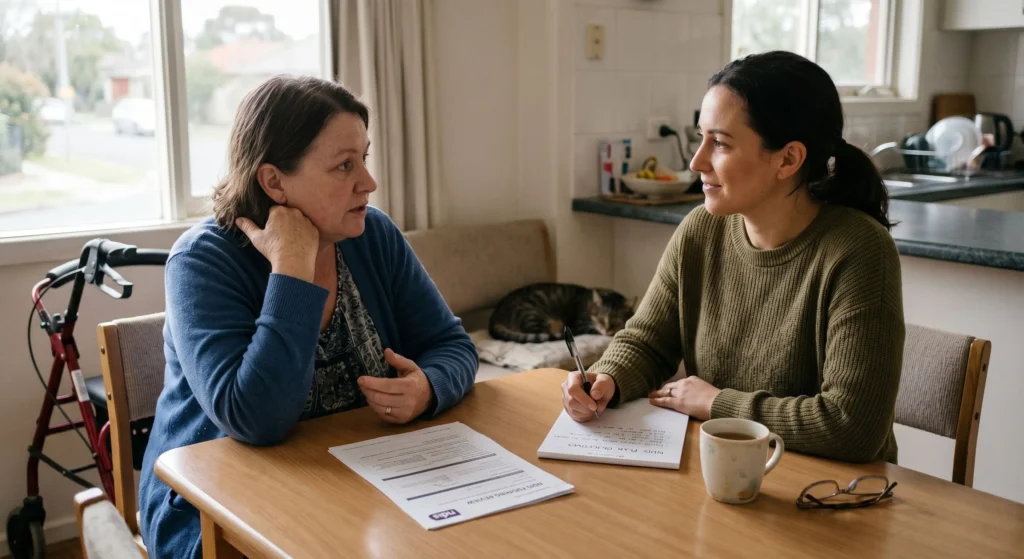
With SIL, your NDIS funding pays for support workers. You are responsible for paying rent, groceries, utilities, and other daily living costs from your own income or Disability Support Pension. All costs should be clearly listed in your Service Agreement before you sign it.
With SDA, the funding goes straight to the SDA provider to cover the cost of the special design and building. You still pay a Reasonable Rent Contribution, usually about 25% of your base Disability Support Pension, plus your regular living expenses. SDA does not make your home free.
If you have both, SDA pays for the home, and SIL pays for the support you get inside it. Each one has its own costs on top of your NDIS funding.
You can get SIL in a regular rental home, a shared house, a home you own, or even in an SDA property. The support is for you, not for a specific type of building.
For a full breakdown of who is eligible, how the Roster of Care works, and what SIL covers, visit our What Is SIL NDIS
NDIS Accommodation Funding: Which One Do You Need?
You Likely Need SIL If
You need regular daily support with personal care, meals, medication, or staying safe at home, and your current home is physically accessible and suitable.
You Likely Need SDA If
Your home is not physically safe or accessible for your level of need, and standard housing with modifications cannot fix that. You have been assessed as having extreme functional impairment or very high support needs.
You May Need Both If
You need significant daily support, and your home cannot meet your physical requirements. SDA provides the right environment. SIL provides the right support inside it.
The NDIS will always consider home modifications and assistive technology before approving an SDA, as these are among the largest funding commitments.
“Not Sure Which One Applies to You? We Can Help”
Our Participants’ Stories: Understanding SIL vs SDA in Real Life
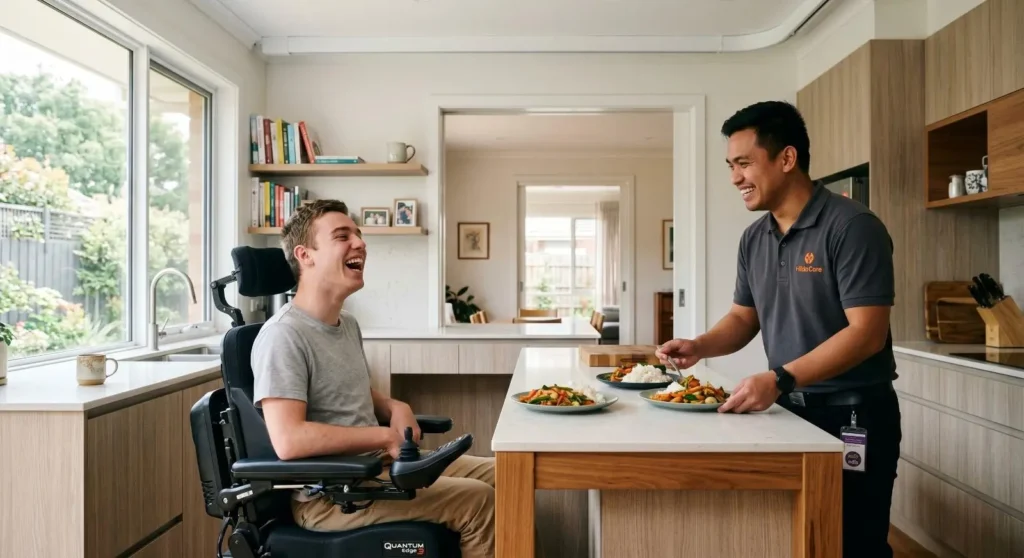
James has cerebral palsy and uses a power wheelchair. His SDA funding pays for a purpose-built home with ceiling hoists, an accessible bathroom, and wider doorways. His SIL funding pays for Hilda Care support workers who help him with personal care, meals, and community activities every day. SDA gives him a home that suits his needs, while SIL provides the people who make daily life possible.
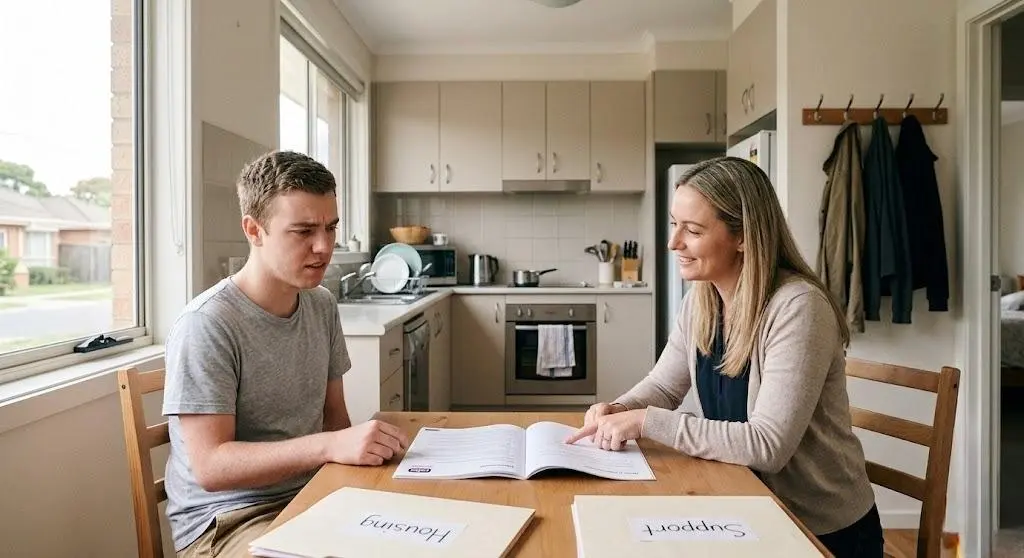
Priya has an intellectual disability and lives in a standard shared rental property with two other participants. She does not have significant physical accessibility needs, so SDA is not part of her plan. Her SIL funding pays for Hilda Care support workers during the day and overnight. Priya only needed SIL because her current home works well for her.
Common Misunderstandings About SIL and SDA
“If I get SDA, my support workers are covered.” Not true. SDA pays for the home. You still need SIL funding separately to have support workers there.
“SIL means I get a house to live in.” Not true. SIL covers the support inside your home. Rent remains your own responsibility.
“You have to live in a group home to get SIL.” Not true. SIL can be delivered in a standard rental, a home you own, or a shared house.
“Changing my SIL provider means I have to move out.” Not true. SIL and SDA are funded independently; you can switch providers without touching your housing arrangement.
How We Help with NDIS Housing Support in Melbourne
Hilda Care has been a registered SIL provider in Melbourne for years, working with participants across the city, from the CBD and inner suburbs to the north, west, east, and south.
Whether you need NDIS housing support through SIL, SDA, or both, we can help you determine what best fits your situation. We review your NDIS plan with you, work with your support coordinator and allied health team to build a Roster of Care that matches your real life, and find support workers who fit your routine and personality.
“Talk to our SIL and SDA team today and get clear guidance on your NDIS housing support options.”

FAQs About SIL vs SDA
If you’re new to the terms, our SIL meaning NDIS guide covers the basics.
If I live in an SDA home, does that mean my daily support is funded?
No. SDA and SIL are funded separately. Living in an SDA-approved home does not mean your support workers are covered. You need separate SIL funding in your NDIS plan for that.
Can I get SIL without having SDA?
Yes. Most SIL participants do not have SDA. SIL is assessed on your daily support needs; SDA is assessed separately on your housing needs.
If I change my SIL provider, do I have to move out of my SDA home?
No. Because they are funded and managed separately, changing your SIL provider does not affect your housing arrangement.
Does SDA funding cover my rent completely?
No. SDA funding covers the specialist design and construction costs paid to the SDA provider. You still pay a Reasonable Rent Contribution, usually about 25% of your Disability Support Pension, plus everyday living costs.
How do I start the process for SDA?
Start with a functional capacity housing assessment from an occupational therapist experienced in housing. If the assessment shows that standard housing cannot safely meet your needs, even with modifications, it forms the basis of your SDA application. Our support coordinators can guide you through gathering the right evidence and through each step of the process.