

- 53+ Reviews on Google
- Multilingual Team
- Registered NDIS Provider #4050126032
SIL Funding Eligibility: Who Qualifies and How to Apply?
In many cases, people qualify for SIL but are often declined because their evidence is not clear enough. To qualify, you need to be a registered NDIS participant with a permanent and significant disability, usually requiring at least eight hours of active daily support, and to demonstrate that SIL is the best fit for your needs compared with less intensive supports. The NDIA does not approve SIL based solely on your diagnosis. What matters is how your disability affects your ability to manage daily life safely and independently.
Understanding the criteria, the evidence needed, and how the application process works can improve your chances of approval.


What SIL Covers And What It Does Not
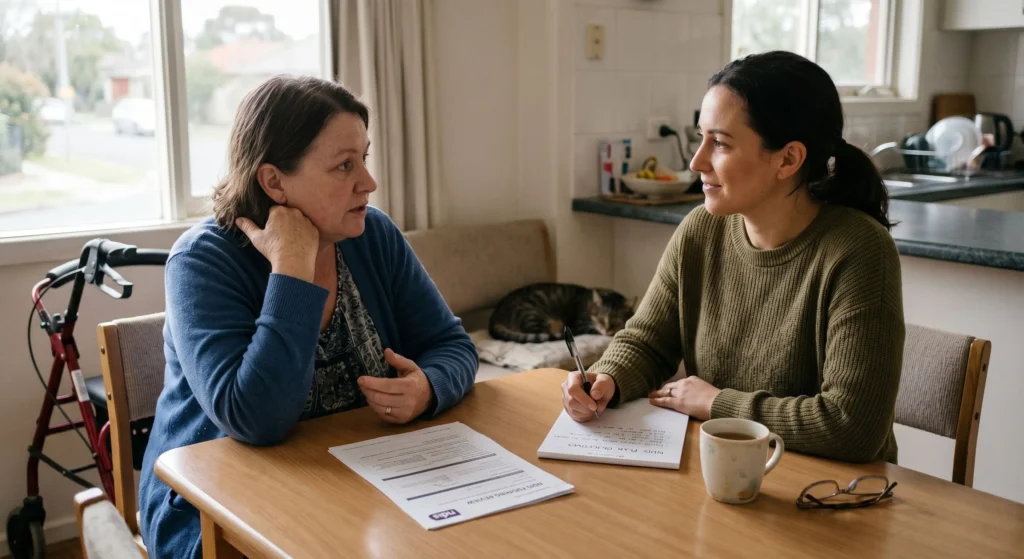
SIL funding covers support workers and the daily assistance they provide at home. This includes personal care, meal preparation, household chores, medication reminders, overnight support, transportation to activities, and help with developing daily living skills.
SIL funding does not cover rent, groceries, electricity, internet, or other everyday living costs. You pay for these with your own income or your Disability Support Pension. If you need funding for a specially designed or modified home, that falls under SDA, a separate NDIS category. SIL and SDA are assessed and funded separately. You may qualify for one, the other, or both.
NDIS SIL Eligibility: The Core Criteria
NDIS SIL eligibility is assessed using the NDIA’s reasonable and necessary criteria. You need to show that SIL is the most suitable and cost-effective support for your situation, not just that you need help at home.
The NDIA considers you potentially eligible for SIL if all three of the following apply:
You Need Active Support for at Least Eight Hours a Day.
This does not mean someone is with you for eight hours straight. It means that, across your day, including your morning routine, meals, medication, personal care, evening support, and overnight, the total adds up to at least eight hours of active support. If your needs are less than this, the NDIA will usually consider other options first, such as Individualised Living Options or drop-in personal care.
Your Current Living Situation Is Not Working Long Term.
If you rely on family members or informal carers, and that arrangement cannot continue due to carer burnout, safety concerns, or your need for independence, this is important evidence for your application. The NDIA wants to see that SIL is truly necessary, not just a preference.
Other Options Would Not Adequately Meet Your Needs.
The NDIA will assess whether supports such as home modifications, assistive technology, ILO, or drop-in personal care could meet your needs before approving SIL. SIL is one of the most intensive and expensive NDIS supports, so approval is stricter.

Who Is Eligible for SIL Under the NDIS Additional Requirements?
In addition to the three main criteria, the NDIA also checks a few other factors when assessing eligibility for Supported Independent Living funding.
| Category | Requirement | Details |
|---|---|---|
| Age | SIL is generally for participants aged 18 and over. | Younger participants are usually supported through family-based arrangements, though there are exceptions. |
| NDIS participant status | You must already be a registered NDIS participant with an active plan. | If you are not yet on the NDIS, that is the first step before any SIL application can move forward. |
| Permanent and significant disability | Your disability must have a lasting impact on your ability to manage daily tasks. | The NDIA is looking at functional impact, not diagnosis. A condition that significantly affects your capacity to live safely and independently is what matters. |
| Goals related to home and living | Your NDIS plan should include goals about independent living. | If your current plan does not mention housing or daily living goals, your support coordinator can help you request a plan review to add them. |
| Diagnosis alone is not enough | Having a diagnosis does not automatically qualify you for SIL. | The NDIA needs to see how your disability affects your daily life, not just the name of your condition. |
SIL Funding Category Placement in Your NDIS Plan
The SIL funding category is part of Core Supports in your NDIS plan, under Assistance with Daily Life. Unlike most other NDIS supports, it does not have a set dollar amount assigned at the start.
This is how the NDIS SIL funding requirements work in practice. The NDIA sets your SIL funding based on your disability support needs. A roster of care is now optional and isn’t submitted to the NDIA. If you and your SIL provider use one, it’s a tool to agree what support happens in your home each week and how your plan funding will be claimed.
The NDIA looks at how many support workers are needed and how they are shared among participants in your home. Common ratios are 1:1 for people with higher needs, or 1:2 or 1:3 in shared houses where support is shared among several residents.
Once approved, your SIL funding is automatically extended every 365 days unless there is a plan review. If your needs change significantly, you or your support coordinator can request a review to adjust your funding.

How the SIL Application Process Works
Understanding how to apply for SIL funding helps you avoid delays or denials.
Get a Functional Capacity Assessment
This is completed by an occupational therapist and is the most important piece of evidence in any SIL application. The assessment looks at every area of your daily life and documents how your disability affects your ability to manage independently. It should include specific recommendations for SIL, not just a general summary of your needs.
Gather Supporting Evidence
Along with the OT assessment, the NDIA will want reports from other health professionals, such as your GP, psychologist, behaviour support practitioner, or other relevant specialists. Daily living logs and letters from carers or family members who can describe your current support situation also strengthen your application.
Submit the Home and Living Supporting Evidence Form
You can submit this NDIS form within 100 days of your plan's end date, with a Change of Situation form, or as part of a scheduled plan review. Your support coordinator can help you fill it out and submit it correctly.
Work with a Registered SIL Provider on a Roster of Care
Once your evidence is ready, your chosen provider creates the Roster of Care and submits it to the NDIA with your application. The NDIA reviews both at the same time.
NDIA Decision
The NDIA will notify you and your provider of its decision in writing. If approved, your plan will be updated to include SIL funding. If declined, you can request an internal review within three months.
Why Most SIL Applications Are Rejected and How to Avoid It
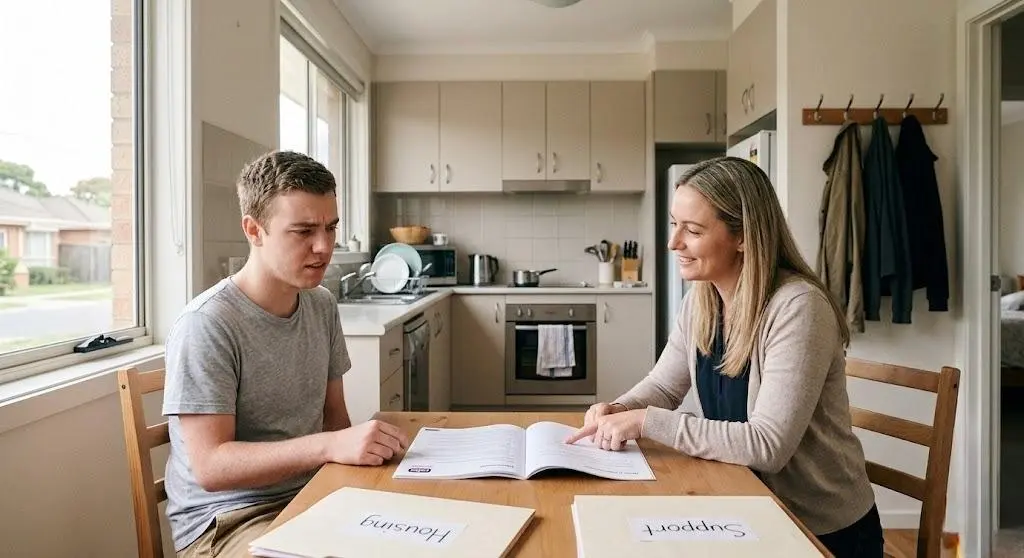
Most rejected SIL applications follow a few common patterns, based on what participants and support coordinators have shared from their experiences.
Common reasons include:
- The evidence does not clearly show why SIL is reasonable and necessary compared to lower-level support options.
- The OT report is too vague or fails to clearly connect your functional challenges to the need for daily support.
- Your current NDIS plan does not include a housing or independent living goal.
- Reports mention support needs but do not clearly explain why those needs require SIL rather than lower-level supports.
If your application is declined, do not assume you do not qualify. Request an internal review, update your evidence with more detailed assessments, and work with your support coordinator to make sure your application clearly explains your situation, not just your diagnosis.
Your funding can also be reviewed if your circumstances change. A medical event, a carer becoming unavailable, or a move to a new living situation are all valid reasons to request a reassessment outside your regular plan review cycle.
How Hilda Care Helps Melbourne Participants with SIL
Hilda Care regularly supports participants with SIL applications, including cases where applications were previously declined due to unclear evidence. We work closely with participants, families, and support coordinators to make sure the evidence clearly shows your real daily support needs.
Our experience includes:
- 150+ participants supported
- Our support workers
- 5000+ hours of support delivered every week
- 20+ SIL and SDA properties
This experience helps us understand what the NDIA looks for and how to present applications clearly.
If you are unsure whether you meet the SIL eligibility criteria, have been previously declined, or are just starting to explore your options, we are happy to talk with you.
“Talk to Our Melbourne SIL Team to Check Your Eligibility and Next Steps!”
Frequently Asked Questions
Can I apply for SIL if I am currently living with family?
Yes. If you live with family and that arrangement cannot continue long term because of carer capacity, your own goals for independence, or safety, this is an important part of your case for SIL. The NDIA will check whether informal support can continue to meet your needs, so having documentation of your current situation helps a lot.
What is the difference between SDA and SIL for eligibility purposes?
The difference between SDA and SIL is what is funded. SIL eligibility is based on your need for daily support from paid workers. SDA eligibility depends on whether your home needs to be purpose-built or specially modified to meet your physical needs. The two are assessed separately, and most SIL participants do not have SDA.
What happens if my SIL application is declined?
You can request an internal review within three months of the decision. While you wait, work with your support coordinator to strengthen your evidence, especially the OT functional capacity assessment and any supporting reports from health professionals. Many people who are first declined are approved after submitting more detailed evidence.
Does my NDIS plan need to mention SIL before I can apply?
Your plan needs to include a home and a living goal. If it does not, ask your support coordinator to help you request a plan review to add one before submitting your SIL application.
How long does SIL funding last once approved?
SIL funding is automatically extended every 365 days unless there is a plan review. It is meant for long-term living arrangements, not short-term support. If your needs change, you can ask for a reassessment at any time.
Once SIL is in your plan, our NDIS plan budget tracking FAQs explain how to keep an eye on spending.