

- 53+ Reviews on Google
- Multilingual Team
- Registered NDIS Provider #4050126032
Local SIL Provider Point Cook
Hilda Care runs more than 20 SIL and SDA properties across Melbourne’s west, supports over 150 participants, and has a team of support workers delivering more than 5,000 hours of support every week. We have been doing this for years, which means we have seen what works and what does not.
Finding the right SIL provider in Point Cook is not about finding a spare room. It is about finding a home where the support is consistent, the people around you are a genuine fit, and the workers who show up actually know your routine. That is what we focus on.



What Is Supported Independent Living, and Is It the Right Fit for You?
SIL stands for Supported Independent Living. It is an NDIS-funded support service where trained workers help you with everyday tasks in your home, including overnight care if needed. The funding comes from your Core Supports budget, so you are not paying for support out of your own pocket.
SIL support in Point Cook can cover:
- Personal care, including showering, grooming, and dressing
- Meal preparation and managing nutrition
- Medication prompts and health routines
- Household tasks like cleaning and laundry
- Getting to appointments, therapy, or community activities
- Building everyday skills at your own pace
- Overnight support or active night shifts, depending on your needs
You can access NDIS SIL in Point Cook in a shared home with other participants or in your own place. The level of support is built around what you actually need, not a fixed package.
SIL Accommodation in Point Cook
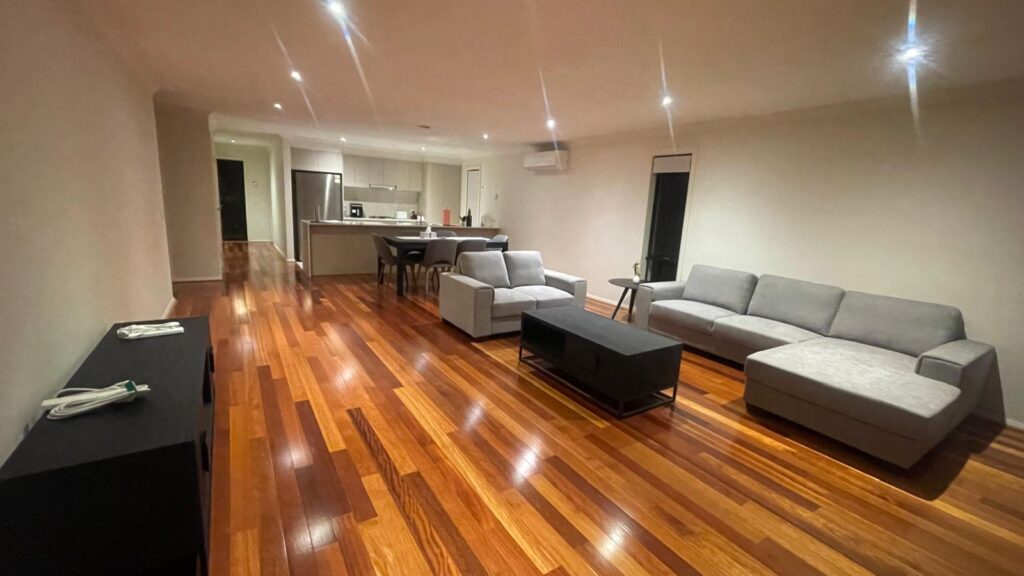
We match people to homes based on compatibility, support needs, and lifestyle, not just availability. Our SIL homes sit close to Point Cook Town Centre, giving residents easy access to everyday amenities while living in a calm, residential setting. Our Point Cook homes offer:
- Fully furnished, accessible rooms with space for personal belongings
- Air conditioning and reliable internet
- Space for family to visit comfortably
- 24/7 staffing, either on-site or on-call
- Homes that meet NDIS and safety standards without feeling institutional

What SIL Support at Hilda Care Actually Looks Like
Personal Care and Daily Routines
Support with showering, grooming, dressing, and continence care. Same key worker wherever possible to keep routines stable and predictable. No constant rotation of unfamiliar staff.
Medication and Health Coordination
Medication support, prescription tracking, and coordination with GPs and allied health providers. Close access to Point Cook Medical Centre and local services when needed.
Skill Building
Practical support for daily living skills like cooking, budgeting, and using public transport. Focused on real progress toward independence at a pace that suits the participant.
Community Access Point Cook
Support to use local bus routes and build travel confidence to Williams Landing and the surrounding areas. Assistance accessing therapy, shopping, and community services when required.
Behaviour Support
Consistent delivery of behaviour support plans with structured routines and trained staff. Close coordination with behaviour practitioners to maintain stability at home.
Complex and High-Intensity Care
Support for higher needs including overnight care, transfers, wound care, and clinical support. Services only provided where care can be delivered safely and appropriately.
Our SIL Vacancies in Point Cook
We currently have SIL vacancies in Point Cook for participants looking for shared or individual supported living arrangements. Properties are listed below and updated when availability changes.
If a property looks like a possibility, reach out, and we will have a proper conversation about whether it is a good fit before anything is committed.



What Hilda Care Does Differently
Most SIL providers say the same things: registered provider, trained staff, person-centred care, 24/7 support. All of that is true for us too, but it is the minimum. Here is what actually separates how we work.
- Meet your support worker before move-in, so you’re not starting with a stranger
- Thoughtful housemate matching based on lifestyle, needs, and compatibility
- Consistent key worker to build trust, routine, and stability over time
- Direct access to a real person with same-day responses, no call queues or tickets
- Multilingual support in 15+ languages for culturally diverse families and participants
What Living in Point Cook Is Actually Like as an NDIS Participant
Point Cook works well for most of our participants, but not for the reasons typically mentioned in generic area guides. Here is what daily life in the suburb actually looks like from the participant’s perspective.
Getting around without a car is possible but requires planning.
Bus routes 494, 495, and 498 connect to Williams Landing Station and the Werribee train line. The 949 runs later into the evening. For participants who rely on public transport, these routes are manageable and our support workers regularly help people build confidence on them. It is worth noting, though, that some footpaths in Point Cook have accessibility gaps, particularly in older sections of the suburb, so we factor this into how we support participants who use mobility aids.
Allied health is genuinely accessible.
Point Cook Medical Centre on Dunnings Road brings together GPs, pathology, physiotherapy, speech therapy, and podiatry in one location. Point Cook Therapy Centre offers occupational therapy and psychology. Concentric Health at Point Cook Manor covers rehabilitation and allied health. For participants who have regular appointments across multiple disciplines, being able to reach most of them locally without a long trip is a real practical advantage.
Shopping and daily errands are straightforward.
Point Cook Town Centre and Sanctuary Lakes Shopping Centre cover everyday needs. Werribee Plaza, a short trip away, has a Medicare office and a wider range of services for days when more is needed.
The residential feel suits a lot of participants well.
Most of our SIL homes in Point Cook sit on quieter streets away from main roads. Participants can walk around the neighbourhood, sit outside, and feel settled rather than overstimulated. For participants who are sensitive to noise or busy environments, the suburb’s layout works in their favour.
Family visiting is practical.
Point Cook is accessible from Hoppers Crossing, Tarneit, Werribee, and Altona, which means families who want to be regularly involved in their family member’s life do not have far to travel.
How to Apply for SIL Step by Step
The SIL process can feel confusing the first time. Here is how it actually works, laid out simply.
| Step | Title | Description |
|---|---|---|
| Step 1 | Check if SIL is the right option. | SIL is for people who need support for most of the day, including overnight. If you only need a few hours of help, there are other options like drop-in support or Individualised Living Options that may be a better fit. Your support coordinator or NDIA planner is the right first conversation. |
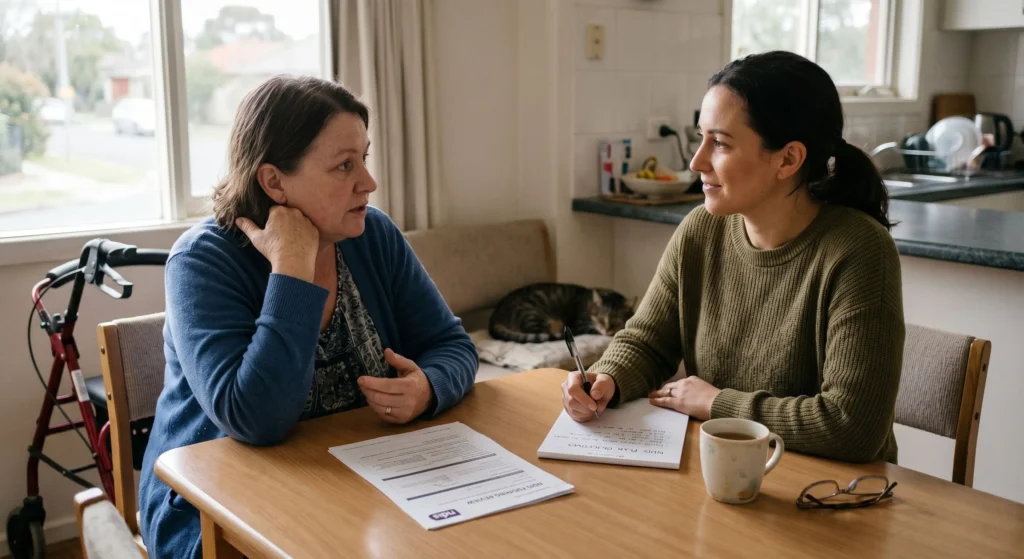
| Step 2 | Get a Functional Capacity Assessment. | A registered occupational therapist visits you at home, looks at what you can and cannot manage across the day, and writes a detailed report. This is the most important piece of evidence in your SIL application, and it needs to be specific, not general. |
| Step 3 | Make sure your NDIS plan includes a housing goal. | Something like "I want to explore supported accommodation options in Point Cook" in your plan gives the NDIA the context they need. If it is not in your current plan, your support coordinator can request a review to add it. |
| Step 4 | Request a plan review if SIL is not already funded. | Your support coordinator can submit a Change of Circumstances request. Include the OT report and any other supporting evidence from your health team. |
| Step 5 | Get a quote from a registered SIL provider. | Once the NDIS is considering your application, they need a formal quote outlining what support you will receive, how many hours, at what level, and what it will cost. We prepare these and can walk you through ours. |
| Step 6 | The NDIS reviews and makes a decision. | The NDIA looks at all the evidence and decides if SIL is the right and cost-effective support for you. This can take time, so starting early matters. If they decline, you have the right to ask for a review of that decision. |
| Step 7 | Visit properties, meet potential housemates, and move in. | Once your funding is approved, you visit the property, meet the people already living there, and agree to a service agreement before moving in. You also meet your key support worker before day one. |
How SIL Funding Works
SIL is funded through your NDIS plan under Core Supports. The NDIS pays Hilda Care directly for the staff support hours in your home. You do not pay for the support itself out of your own pocket.
What SIL does not cover:
- Rent or property costs
- Groceries and food
- Electricity and internet bills
- Personal spending
You still need to cover your own living costs, just like anyone living independently. If you also have SDA funding, that covers the housing costs. Not everyone with SIL has SDA, but some participants have both funded separately.
The amount of SIL funding in your plan depends entirely on your assessed support needs. If you are trying to understand your current plan or what you might be eligible for, call us and we will go through it with you.
What the SIL Assessment Process Involves
Functional Capacity Assessment. This is the core document your SIL application is built around. The OT looks at how you manage daily tasks at different times of day, whether you need overnight support, how you communicate, and what type of living arrangement suits you. It takes time to do properly, and it is worth investing in a thorough one.
Support Needs Assessment. Some applicants undergo a separate support-needs assessment that breaks down the number of hours of support required for specific tasks. This helps the NDIA build the right funding level.
NDIA Decision. The NDIA reviews everything and decides whether SIL is the most appropriate option. They may consider other supports first. If approved, the funding is included in your plan.
Roster of Care. Once you are matched to a home and a provider, a detailed Roster of Care is created. It shows exactly what support is delivered, when, and by whom. This becomes part of your service agreement.
We can connect you with OTs and support coordinators who know this process well and regularly work in the Point Cook and western Melbourne areas.

 Posted on Google
 Omar Soliman
Trustindex verifies that the original source of the review is Google.
Really happy with the support I’m getting. Everyone is friendly, easy to talk to, and actually listens. I feel supported and comfortable. Would definitely recommend.Posted on Google WarrenI have found the services to be unbelievably great in my situation. I recommend the services to everyone who wants to be taken care of in Melbourne.Posted on Google
 Amira MoussaI’m so grateful for the care and support I receive from Hilda Care. I’ve always felt respected, valued, and genuinely listened to. The team is kind, patient, and supportive, and communication is always clear! I honestly feel lucky to be part of a service that truly cares about their clients. Thank you!!!Posted on Google
 Omar Moussa (omzy96)Lovely NDIS provider providing support throughout all of Melbourne. I have personally recieved support through Hilda Care for the past 6 months roughly. Their administration is top notch. They have gone above and beyond providing personalised support workers for my needs, have promptly resolved any issues I may have and they always try their best to deliver extra services that may help me with my needs and support. Thank you Hilda Care, you've made my transition into the NDIS as seamless as possible, and I really look forward for the years ahead 😊Posted on Google
 Grahm WatsonThanks for looking after me in SIL house in Burnside Heights. Management is excellent. Happy is looking after me very well. ThanksPosted on Google
 Kim Fleming
Trustindex verifies that the original source of the review is Google.
My experience dealing with this organisation has been very disappointing. They seem unorganised, unprofessional arrogant and downright disrespectful of peoples time.Posted on Google Divyanshu SethiHilda Care is outstanding. As a Support Coordinator, I’ve had situations where I needed a Support Worker at the very last minute for my cleints, and they delivered without hesitation. Not once or twice but always. They found the right person within hours and made sure the client felt safe and supported. They have paid heed to client’s feedback and tweaked their services accordingly everytime. Their staff are well trained, reliable, and always go above and beyond to meet client needs. It’s clear they genuinely put clients first. Highly recommended.Posted on Google
 Tommy NjegacThank you Hilda care for providing me services in caroline springs. Harry is amazing support worker. He really understands me well and my needs. God bless your company.Posted on Google
 Yasemin YakupThis is one of the most reliable and compassionate disability service providers we’ve worked with. Their communication is clear. The support workers show great understanding and patience, especially during challenging moments. They make everyday routines more enjoyable and less stressful for everyone involved. We feel very lucky to have them on our side.Verified by TrustindexTrustindex verified badge is the Universal Symbol of Trust. Only the greatest companies can get the verified badge who has a review score above 4.5, based on customer reviews over the past 12 months. Read more
Frequently Asked Questions (FAQs)
Can I meet potential housemates before I commit to moving in?
Yes. We always arrange a visit to the home and introductions to anyone already living there before you sign anything. Moving into a shared house with people you have never met is not how we operate.
What happens if my support worker is unavailable?
We work hard to keep your primary support worker consistent. If something changes, we contact you directly and make sure you know who is covering and why. You are never handed over to a stranger without warning.
Can I choose who I live with?
We match based on compatibility, lifestyle, support needs, and communication styles. You will not always have full choice, but the matching process is real, and your comfort in the home is part of how we assess every placement.
Does SIL cover 24-hour support?
Yes. SIL is specifically designed for people who need support or supervision 24 hours a day, including active overnight support or sleepover arrangements, depending on what your plan covers.
What is the difference between SIL and SDA?
SDA is the physical housing, purpose-built for people with extreme functional impairment. SIL is the support staff inside the home. You can have SIL without SDA, and some participants have both funded separately. They are completely independent of each other.
I am not sure if I qualify. What should I do?
Reach out, and we will ask a few questions and give you an honest answer, including whether there is a better option than SIL for your situation. We would rather tell you that upfront than have you go through a lengthy process for something that is not the right fit.
Find the Right SIL Home in Point Cook
If you are looking for NDIS-supported independent living in Point Cook, reach out, and we will take it from there. Whether you are just starting to explore options, waiting on your plan, or ready to move now, we are happy to have a conversation.