

- 53+ Reviews on Google
- Multilingual Team
- Registered NDIS Provider #4050126032
NDIS Acquired Brain Injury (ABI) Support in Melbourne
Support looks different for every person with an acquired brain injury. Some participants need help with memory and daily routines. Others need support managing fatigue, emotional regulation, or personal care tasks they can no longer handle safely alone.
Our team provides NDIS-acquired brain injury support across Greater Melbourne and Victoria. Support is practical and consistent, built around each participant’s assessed functional needs rather than the diagnosis alone.


What Counts as an Acquired Brain Injury?
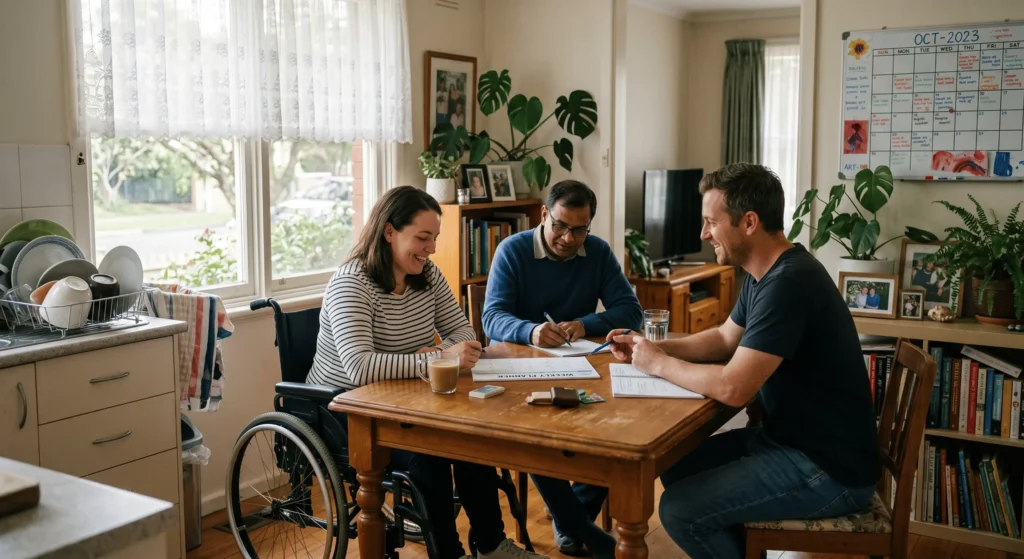
An acquired brain injury is any damage to the brain that occurs after birth, not something you’re born with, and not genetic. It can result from a stroke, traumatic accident, infection, lack of oxygen, or a medical event like a tumour or aneurysm.
The same cause can produce entirely different outcomes for different people. One person may struggle with memory and fatigue. Another faces emotional regulation challenges or physical mobility issues. That variation is exactly why ABI support services have to be built around the individual.
Signs Someone May Need ABI Support
Recognising when NDIS support may be appropriate is not always straightforward, particularly when mental and emotional changes develop gradually after an injury. Some common signs include:
- Difficulty managing daily tasks that were previously routine, like cooking, budgeting, or keeping appointments
- Increased fatigue that makes sustained effort difficult, even for short periods
- Mood changes, acting without thinking, or emotional outbursts that feel out of character
- Memory problems, forgetting conversations, losing track of time, or repeating the same questions
- Social withdrawal or difficulty reading social cues
- Relying heavily on family or carers for tasks that were once independent
These signs don’t always follow immediately after the injury. Some emerge over weeks or months, particularly with traumatic brain injuries or stroke. If any of these feel familiar, speaking to a GP or NDIS planner about available support is a good next step.
How an Acquired Brain Injury Affects Day-to-Day Life
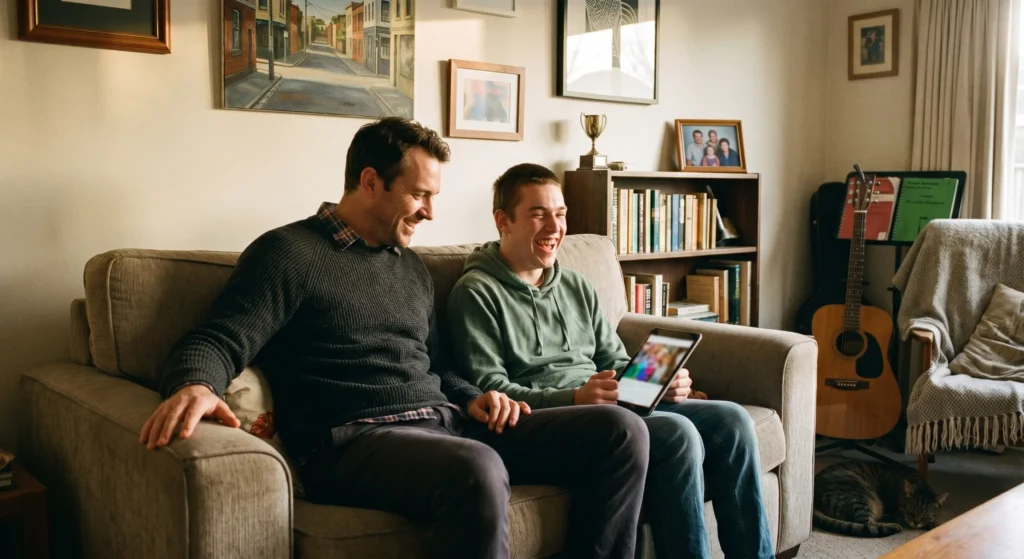
Support workers assist participants where fatigue, reduced concentration, or difficulty sequencing tasks affect daily functioning. Tasks that previously took minutes may now require structured assistance, prompting, or an entirely different approach.
For a participant who has had a stroke, support may include morning routines, meal preparation, transportation to appointments, and prompting for daily tasks when fatigue affects capacity. A support worker providing regular, consistent assistance helps maintain structure and safety in the home.
Changes to thinking, memory, and emotional regulation after a brain injury are not always visible to others. Consistent, well-matched ABI support helps participants maintain daily functioning and reduces reliance on informal carers over time.
What are the NDIS Funds for Acquired Brain Injury
NDIS funding is based on the functional impact of an acquired brain injury, not on the injury or its treatment. If the impairment is permanent or likely to be ongoing, the NDIA can fund a range of supports across Core and Capacity Building budgets.
Clinical treatment, including rehabilitation, neuropsychology, speech pathology, and medication, sits outside NDIS funding and is accessed through the health system. The NDIS picks up where clinical care ends: day-to-day assistance, community access, skill building, and supported living.
For participants with higher support needs, funding can extend to supported independent living with support available day and night.

How to Access NDIS ABI Support
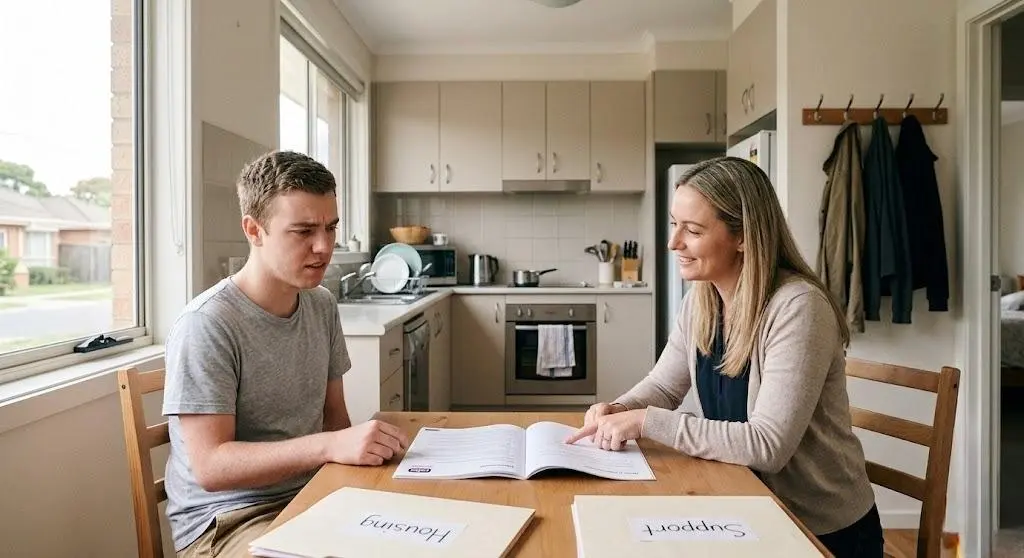
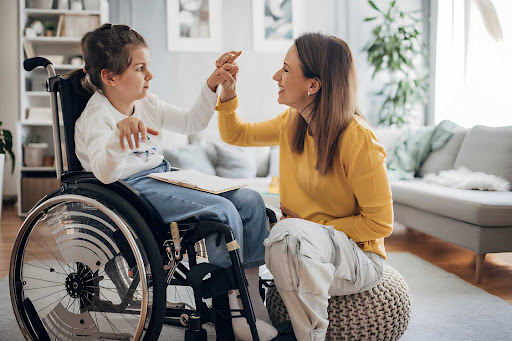
The starting point is demonstrating that the ABI has a permanent or likely permanent functional impact. That evidence typically comes from a neurologist, GP, or occupational therapist, someone who can speak to how the injury affects daily life, not just confirm the diagnosis.
From there, an NDIS application is submitted through the my NDIS portal or by calling the NDIA directly. If you’re already a participant and NDIS ABI support isn’t in your current plan, the next plan review is the right time to raise it or sooner, if your needs have changed significantly.
Once support is funded, you choose your provider and set up a service agreement. Hilda Care works with participants across all plan management types, agency-managed, plan-managed, and self-managed and can help get the right supports in place from the first conversation.
Types of ABI Support Available Through the NDIS
Personal Care and Daily Living Assistance
Core Supports fund the practical, day-to-day help that keeps life running. For participants with an acquired brain injury, this typically covers personal care, morning and evening routines, meal preparation, medication prompts, and household tasks.
It can also cover transport for those who can no longer drive safely and community participation in getting to appointments, social activities, and community programs with a brain injury support worker alongside.
Skill Development and Capacity Building
Capacity Building funding is about progress, not just assistance. For ABI participants, this can cover supports that work alongside allied health professionals, helping put memory techniques, communication tools, and daily routines into practice between therapy sessions.
Development of life skills falls under this budget, covering structured skill-building that helps participants do more independently over time, whether that’s managing a schedule, preparing meals, or handling everyday decisions with more confidence.
Behaviour Support for ABI Participants
Where a brain injury has resulted in behaviours of concern, the NDIS can fund a specialist behaviour support practitioner to develop a formal plan. The provider is then responsible for implementing it consistently.
Our team has direct experience implementing behaviour support plans for ABI support participants across Melbourne and Victoria. Support workers are trained and guided by the plan, not improvising responses in the moment.
Supported Independent Living for High-Support ABI Participants
Participants who need support throughout the day and night may have supported independent living funded in their NDIS plan. SIL covers the cost of support workers in a shared or individual living arrangement, separate from the cost of the accommodation itself.


Why NDIS Participants and Families Choose Hilda Care for ABI Support
For participants with an acquired brain injury, consistency in support workers has a direct impact on stability and daily functioning.
Our team matches participants with workers based on personality, communication style, and cultural background, and maintains that match over time. The team includes staff across English, Italian, Turkish, Filipino, Portuguese, and Macedonian, so language is never a barrier to getting the right ABI home support.
Fully registered with the NDIS Quality and Safeguards Commission (Provider Registration Number: 4050126032), all brain injury care services delivered by Hilda Care meet the NDIS Practice Standards, including for high-intensity supports.
ABI Support Across Melbourne, Victoria, and Australia
Hilda Care is trusted by participants and families across Greater Melbourne and Victoria for acquired brain injury support that’s consistent, practical, and built around individual needs. Whether support is needed at home, in the community, or across both, workers are available across the metro area.
Services cover Berwick, Caroline Springs, Caulfield, Clayton, Dandenong, Footscray, Hoppers Crossing, Preston, Springvale, Sunshine, Werribee, and surrounding suburbs. Support also extends to Adelaide, Perth, Sydney, and Tasmania for participants who need continuity of care interstate.

 Posted on Google
 Omar Soliman
Trustindex verifies that the original source of the review is Google.
Really happy with the support I’m getting. Everyone is friendly, easy to talk to, and actually listens. I feel supported and comfortable. Would definitely recommend.Posted on Google WarrenI have found the services to be unbelievably great in my situation. I recommend the services to everyone who wants to be taken care of in Melbourne.Posted on Google
 Amira MoussaI’m so grateful for the care and support I receive from Hilda Care. I’ve always felt respected, valued, and genuinely listened to. The team is kind, patient, and supportive, and communication is always clear! I honestly feel lucky to be part of a service that truly cares about their clients. Thank you!!!Posted on Google
 Omar Moussa (omzy96)Lovely NDIS provider providing support throughout all of Melbourne. I have personally recieved support through Hilda Care for the past 6 months roughly. Their administration is top notch. They have gone above and beyond providing personalised support workers for my needs, have promptly resolved any issues I may have and they always try their best to deliver extra services that may help me with my needs and support. Thank you Hilda Care, you've made my transition into the NDIS as seamless as possible, and I really look forward for the years ahead 😊Posted on Google
 Grahm WatsonThanks for looking after me in SIL house in Burnside Heights. Management is excellent. Happy is looking after me very well. ThanksPosted on Google
 Kim Fleming
Trustindex verifies that the original source of the review is Google.
My experience dealing with this organisation has been very disappointing. They seem unorganised, unprofessional arrogant and downright disrespectful of peoples time.Posted on Google Divyanshu SethiHilda Care is outstanding. As a Support Coordinator, I’ve had situations where I needed a Support Worker at the very last minute for my cleints, and they delivered without hesitation. Not once or twice but always. They found the right person within hours and made sure the client felt safe and supported. They have paid heed to client’s feedback and tweaked their services accordingly everytime. Their staff are well trained, reliable, and always go above and beyond to meet client needs. It’s clear they genuinely put clients first. Highly recommended.Posted on Google
 Tommy NjegacThank you Hilda care for providing me services in caroline springs. Harry is amazing support worker. He really understands me well and my needs. God bless your company.Posted on Google
 Yasemin YakupThis is one of the most reliable and compassionate disability service providers we’ve worked with. Their communication is clear. The support workers show great understanding and patience, especially during challenging moments. They make everyday routines more enjoyable and less stressful for everyone involved. We feel very lucky to have them on our side.Verified by TrustindexTrustindex verified badge is the Universal Symbol of Trust. Only the greatest companies can get the verified badge who has a review score above 4.5, based on customer reviews over the past 12 months. Read more
Frequently Asked Questions (FAQs)
Does the NDIS cover acquired brain injury?
Yes. Acquired brain injury is a recognised disability under the NDIS where it causes a permanent, significant impact on daily functioning. Support can include personal care, routine structure and skill rebuilding.
What does a brain injury support worker actually do?
Day-to-day tasks vary depending on the participant’s plan and goals, but typically include personal care, help with meals and household tasks, transport to appointments, and reinforcement of therapy strategies in everyday situations. The aim is to build independence, not create reliance on the worker.
Can I access NDIS ABI support if my injury happened years ago?
Yes. The NDIS assesses current functional impact, not when the injury occurred. If the effects are still significantly affecting daily life, a participant may be eligible or, if already on the NDIS, can access ABI support services through their existing funded hours.
What's the difference between ABI support and rehabilitation?
Rehabilitation is clinically delivered by allied health professionals and funded through the health system. NDIS acquired brain injury support covers what sits outside clinical settings: day-to-day living, community access, and skill reinforcement over time.
Can behaviour support be included in an ABI NDIS plan?
Yes. Where behaviours of concern are present, a registered behaviour support practitioner develops a formal plan, and the provider implements it. Hilda Care has direct experience with this, and all relevant workers are trained and overseen in line with NDIS Practice Standards.
What if my support needs have changed since my last plan review?
You don’t have to wait. If your situation has changed significantly, a decline in function, a hospitalisation, or a major change in circumstances, you can request a change of circumstances review through the my NDIS portal or by contacting the NDIA directly.
Get in Touch With the Hilda Care Team
Our team supports people with acquired brain injury across Greater Melbourne and Victoria, from the initial enquiry through to consistent, ongoing ABI support services.
Contact the team to discuss support options for your current NDIS plan or an upcoming plan review.
Phone: 1300 440 777
Email: info@hildacare.com.au
Address: Level 32, 367 Collins St, Melbourne VIC 3000