

- 53+ Reviews on Google
- Multilingual Team
- Registered NDIS Provider #4050126032
SIL Provider Greater Dandenong: NDIS Supported Independent Living
Greater Dandenong is one of the most culturally diverse communities in Australia, and for many families here, navigating the NDIS brings its own challenges. Language barriers, unfamiliarity with the system, and finding a provider who actually understands the community are real obstacles.
At Hilda Care, we have been working in this area long enough to know what that looks like in practice. We are a registered NDIS SIL provider in Greater Dandenong with a team of our support workers, more than 150 participants currently in our care, and more than 5,000 hours of support delivered every week. Our team reflects the diversity of this community, including staff who speak languages common across Dandenong, Springvale, and Noble Park.


SIL and SDA: What Is the Difference?
These two terms appear together constantly and are easy to mix up. The clearest way to understand them is this: SIL is the support team, SDA is the physical home.
SDA
Specialist Disability Accommodation is funding for the physical building. It is home purpose-built or specially modified for people with extreme functional impairment or very high support needs. Features like ceiling hoists, wider doorways, and reinforced walls are covered by SDA.
SIL
Supported Independent Living
Supported Independent Living covers the cost of the support workers who help you with daily tasks inside your home. It does not pay for rent or the property itself. SIL can be delivered in a standard rental home, a shared house, or an SDA-approved property.
Both can be funded together, but are assessed and approved separately by the NDIA. Most participants in Greater Dandenong receive SIL without SDA. If you are unsure which applies to your situation, we can help you work through it before your next planning conversation.
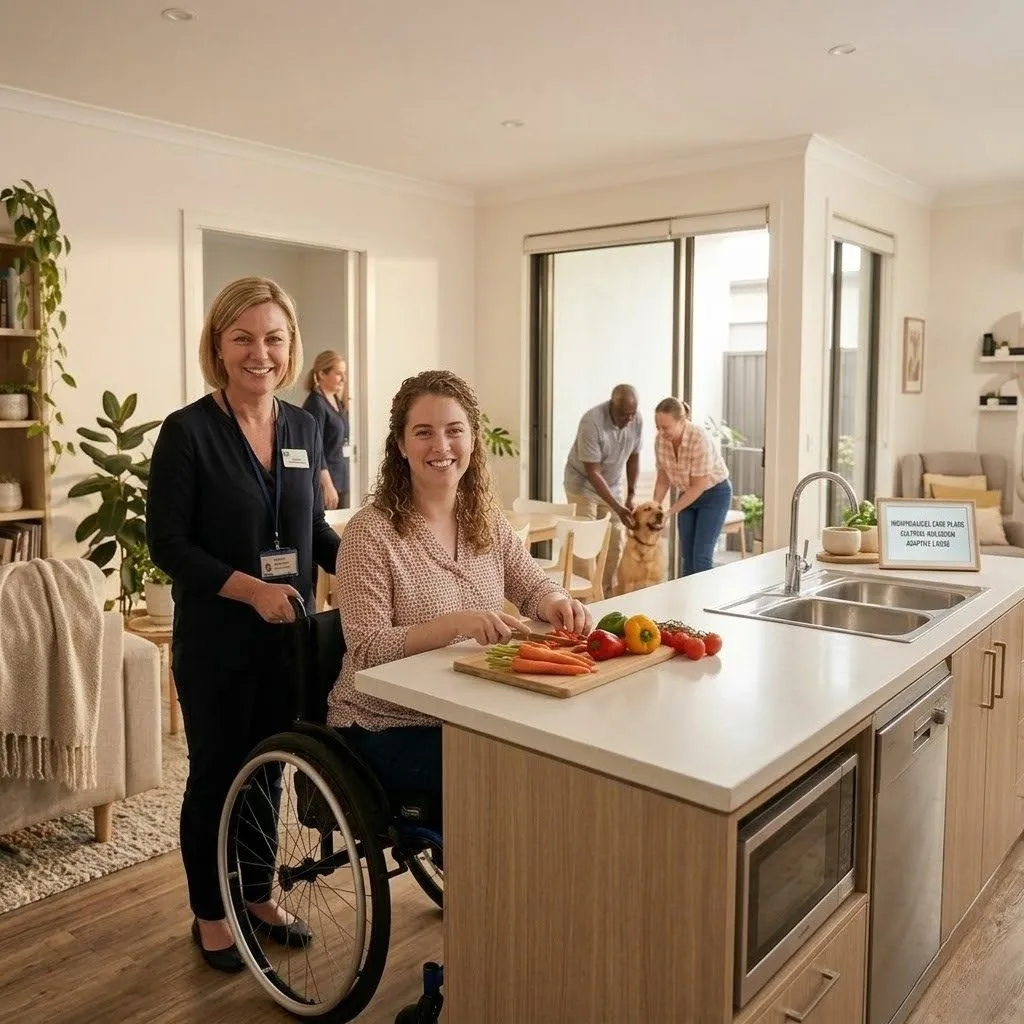
What Does Supported Independent Living in Greater Dandenong Cover?
SIL is funded as a stated support in your NDIS plan. It covers the support workers who help you live as independently as possible. The NDIS determines how much funding you receive based on your assessed support needs, so what you receive is built around your actual daily life.
Independent living support in Greater Dandenong through Hilda Care typically includes:
- Personal care, such as showering, dressing, grooming, and morning and evening routines, is done at a pace that suits you
- Household tasks, including cooking, cleaning, laundry, and keeping the home running day to day
- Medication management with trained staff assisting safely and coordinating with healthcare providers where needed
- Life skills development with practical support around budgeting, shopping, meal planning, and building daily confidence
- Community access, including help getting to appointments, visiting family, and staying connected to what matters
- Overnight support with active overnight or sleepover arrangements, depending on your assessed needs
- Goal-focused support planning with plans reviewed regularly and the participant’s input at every step
Before any placement, we take time to understand your personality, communication style, cultural background, dietary requirements, and daily preferences. For many of our participants in Greater Dandenong, that cultural understanding is what makes the support actually work.
Supported Independent Living in Springvale and Dandenong
We manage more than 20 SIL and SDA properties across Greater Dandenong and surrounding areas. Our SIL homes in Greater Dandenong are in quiet residential streets across suburbs including Dandenong, Springvale, Noble Park, and Keysborough, chosen for their access to transport, healthcare, and the community services our participants use most.
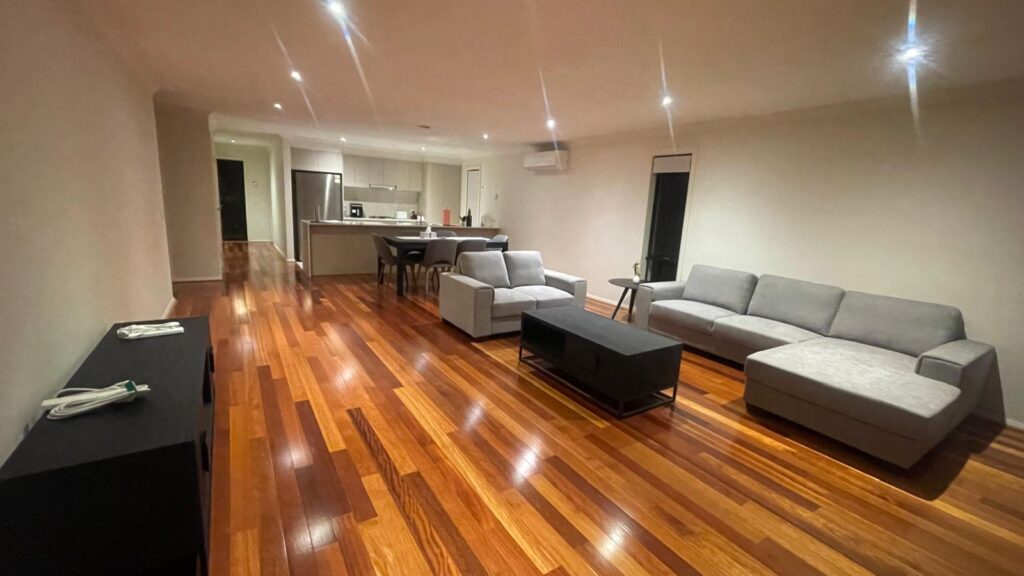
Each home is accessible, consistently staffed, and set up to feel like a place people actually live. Participants have their own private space, shared common areas, and housemates who have been carefully matched. Properties are maintained to a standard we would be comfortable with ourselves.


Who Is Eligible for SIL in Greater Dandenong?
SIL is available to NDIS participants who need a significant level of daily support. You may be eligible if you:
- Have high daily support needs related to your disability
- Require support for eight or more hours per day
- Need regular assistance with personal care, household tasks, or overnight support
- Have independent or supported living as a goal in your NDIS plan
If you are not sure whether SIL is right for your situation, speaking with your support coordinator is the right first step. An Occupational Therapist assessment will also help clarify what level of support you actually need. For people with lower support needs, options like Individualised Living Options or drop-in support may be more appropriate, and we will tell you that honestly rather than push you toward a service that does not fit.

What Living in Greater Dandenong Looks Like for Our Participants
Greater Dandenong is officially the most culturally diverse local government area in Victoria, with residents from 157 different birthplaces and languages, including Persian, Dari, Khmer, Tamil, Punjabi, Vietnamese, and Sinhalese spoken across the area. For participants whose first language is not English, or whose families observe specific religious practices or dietary requirements, this is one of the few areas in Melbourne where that is the norm rather than the exception.
Halal food is widely available, prayer facilities are accessible, and the general community environment reflects a level of cultural acceptance that is not always present elsewhere. Our team reflects the same diversity, with support workers who understand these considerations from experience, not just training.
Public transport is genuinely usable. Dandenong, Springvale, and Noble Park stations are all on the Cranbourne and Pakenham lines, and our support workers travel with participants who are building confidence on these routes until they are ready to travel independently.
Daily life is well served too, with the Springvale Road and Dandenong Market areas offering food, groceries, and community connection in a multicultural setting that many of our participants find comfortable and familiar.
Why Families Choose Hilda Care as Their SIL Provider in Greater Dandenong
- You meet your support worker before you move in. Properly, ahead of time, not on the morning you arrive with your belongings.
- Housemate matching is done carefully. Before anyone moves in, we look at shared interests, daily routines, communication styles, cultural background, and support needs. You visit the home and meet whoever is already there before committing.
- Your key worker stays consistent. Constant staff changes are the most common complaint we hear from families who have left other providers, so we work hard to keep your primary worker the same.
- We are multilingual. Our team speaks Persian, Dari, Vietnamese, and other languages common across Greater Dandenong. Where English is a second language, this is not a small thing.
- You reach a real person when something comes up. Someone at Hilda Care who already knows your situation, not a call centre queue and not an after-hours form.

How to Apply for NDIS SIL Housing in Greater Dandenong
| Step | Description |
|---|---|
| Step 1 | Confirm your NDIS plan includes a housing goal. Your plan should reflect that you are working toward supported or independent living. Your support coordinator can help update this if needed. |
| Step 2 | Get an Occupational Therapist assessment. A registered OT spends time with you in your current living situation, looking at how you manage tasks like personal care, cooking, cleaning, medication, and getting around. They write a detailed Functional Capacity Assessment with specific recommendations. This is the key piece of evidence the NDIA uses to determine your SIL funding level. |
| Step 3 | Engage a support coordinator. All SIL participants are funded for a support coordinator. They help you find a suitable provider, gather documentation, and manage the process. |
| Step 4 | Choose a provider and get a Roster of Care. Your provider prepares a Roster of Care, a detailed document outlining the support you would receive and its cost. This is submitted to the NDIA alongside your application. |
| Step 5 | Submit a Change of Circumstances request. Your support coordinator lodges this with the NDIA, requesting SIL be added to your plan, along with the Functional Capacity Assessment and other supporting evidence. |
| Step 6 | NDIA reviews and decides. The NDIA reviews all documentation and considers whether SIL is the most appropriate option alongside your existing supports, and whether the request is directly related to your disability. They notify you and your provider of the funding decision in writing. If SIL is not approved the first time, you can request an internal review within three months. |
| Step 7 | Visit homes, meet potential housemates, and move in. Once approved, you visit the properties, meet anyone already living there, and sign a service agreement before moving in. At Hilda Care, you also meet your key support worker before day one. |
The whole process typically takes three to six months, and starting early makes a real difference to how smoothly it goes. We have walked many participants and families across Greater Dandenong and the broader south-east through each stage, and we can help prepare documentation that gives your application the best chance of being approved the first time.
How SIL Funding Works
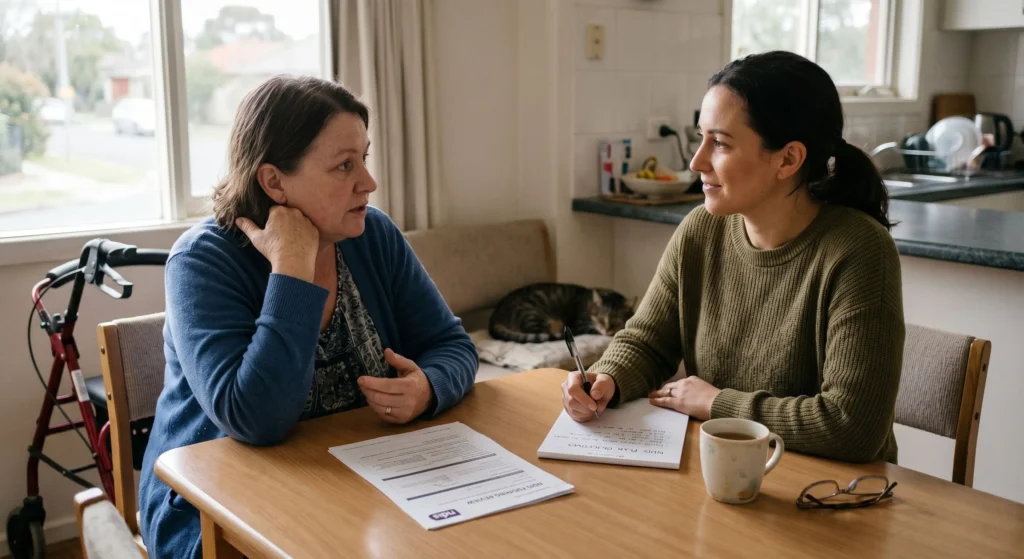
SIL funding sits under the Assistance with Daily Life category in your NDIS plan. It is a stated support, meaning it has to be specifically approved by the NDIA for that purpose and is not part of your flexible Core budget.
Your funding level is determined by three factors:
- Your assessed support needs
- The Roster of Care prepared by your provider
- The Functional Capacity Assessment from your Occupational Therapist.
Everyday living costs such as rent, groceries, utilities, and personal expenses are not covered by SIL and are paid from your own income, which, for most participants, is the Disability Support Pension.
If you want help understanding what your current plan covers, call us, and we will go through it with you.
 Posted on Google
 Omar Soliman
Trustindex verifies that the original source of the review is Google.
Really happy with the support I’m getting. Everyone is friendly, easy to talk to, and actually listens. I feel supported and comfortable. Would definitely recommend.Posted on Google WarrenI have found the services to be unbelievably great in my situation. I recommend the services to everyone who wants to be taken care of in Melbourne.Posted on Google
 Amira MoussaI’m so grateful for the care and support I receive from Hilda Care. I’ve always felt respected, valued, and genuinely listened to. The team is kind, patient, and supportive, and communication is always clear! I honestly feel lucky to be part of a service that truly cares about their clients. Thank you!!!Posted on Google
 Omar Moussa (omzy96)Lovely NDIS provider providing support throughout all of Melbourne. I have personally recieved support through Hilda Care for the past 6 months roughly. Their administration is top notch. They have gone above and beyond providing personalised support workers for my needs, have promptly resolved any issues I may have and they always try their best to deliver extra services that may help me with my needs and support. Thank you Hilda Care, you've made my transition into the NDIS as seamless as possible, and I really look forward for the years ahead 😊Posted on Google
 Grahm WatsonThanks for looking after me in SIL house in Burnside Heights. Management is excellent. Happy is looking after me very well. ThanksPosted on Google
 Kim Fleming
Trustindex verifies that the original source of the review is Google.
My experience dealing with this organisation has been very disappointing. They seem unorganised, unprofessional arrogant and downright disrespectful of peoples time.Posted on Google Divyanshu SethiHilda Care is outstanding. As a Support Coordinator, I’ve had situations where I needed a Support Worker at the very last minute for my cleints, and they delivered without hesitation. Not once or twice but always. They found the right person within hours and made sure the client felt safe and supported. They have paid heed to client’s feedback and tweaked their services accordingly everytime. Their staff are well trained, reliable, and always go above and beyond to meet client needs. It’s clear they genuinely put clients first. Highly recommended.Posted on Google
 Tommy NjegacThank you Hilda care for providing me services in caroline springs. Harry is amazing support worker. He really understands me well and my needs. God bless your company.Posted on Google
 Yasemin YakupThis is one of the most reliable and compassionate disability service providers we’ve worked with. Their communication is clear. The support workers show great understanding and patience, especially during challenging moments. They make everyday routines more enjoyable and less stressful for everyone involved. We feel very lucky to have them on our side.Verified by TrustindexTrustindex verified badge is the Universal Symbol of Trust. Only the greatest companies can get the verified badge who has a review score above 4.5, based on customer reviews over the past 12 months. Read more
Frequently Asked Questions (FAQs)
Can I choose my own support workers?
Yes. Participant choice is central to the NDIS. You can request specific workers, give feedback on who is supporting you, and be involved in those decisions throughout. We take matching seriously and welcome your input from the start.
What happens if my support needs change?
Your Roster of Care can be reviewed and updated when your circumstances change. Your support coordinator can request a plan review, and we will adjust the support accordingly. You are not locked into an arrangement that no longer fits your life.
How long does SIL approval take?
Typically, several months after your OT assessment is completed. Having your documentation in order and starting the process early helps avoid unnecessary delays. Our team can help you understand what is needed and prepare a thorough application.
Can I visit a home before deciding?
Yes, and we encourage it. Seeing the home, meeting the staff who work there, and understanding who you would be living with are important parts of making a good decision. We welcome visits from participants, families, and support coordinators.
What if I do not get along with my housemates?
We take housemate matching seriously before anyone moves in, considering shared interests, daily routines, cultural backgrounds, and support needs. If issues come up after someone moves in, we work with everyone involved to find a solution. If a change is needed, we will work to make it happen.
Ready to Find the Right SIL Accommodation in Greater Dandenong?
If you are looking for a trusted SIL provider in Greater Dandenong, we are happy to hear from you at any stage. Some families come to us before SIL funding is confirmed. Others come with everything approved and just need the right home. Either way, we can help.
Call us, and we will respond the same day, where possible. You can also send an enquiry or arrange a visit to one of our homes. We welcome participants, families, and support coordinators.
For in-home support close by, see our NDIS Springvale page.