

- 53+ Reviews on Google
- Multilingual Team
- Registered NDIS Provider #4050126032
NDIS Cooking Classes Melbourne
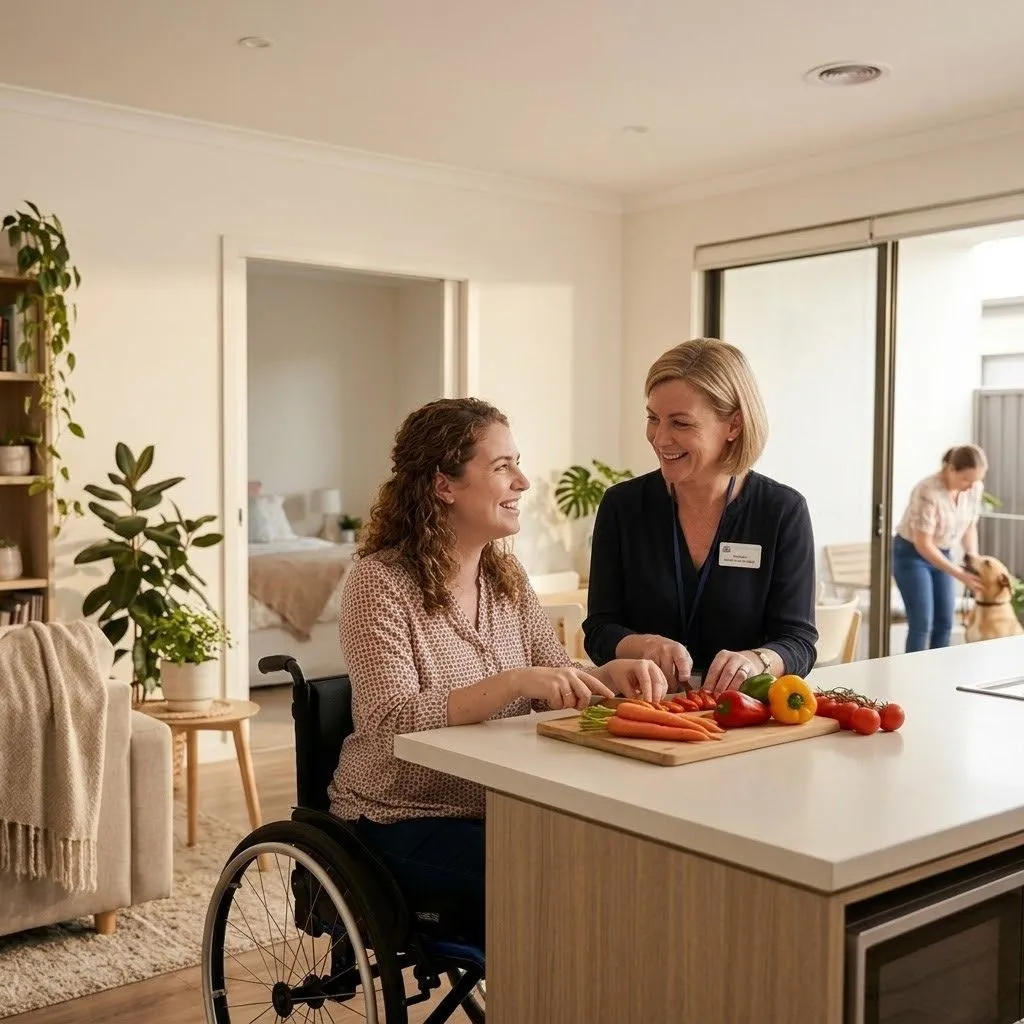
Our NDIS cooking classes in Melbourne are provided one-on-one or in small groups, in your own kitchen or at a local community venue. Every session is built around your goals, your cultural background, and what you already know how to do in the kitchen.
As a registered NDIS provider in Melbourne, our daily living skills training and meal preparation skills sessions are available across Preston, Dandenong, Footscray, Hoppers Crossing, Caulfield, and surrounding suburbs.


What We Teach in Our Cooking Classes
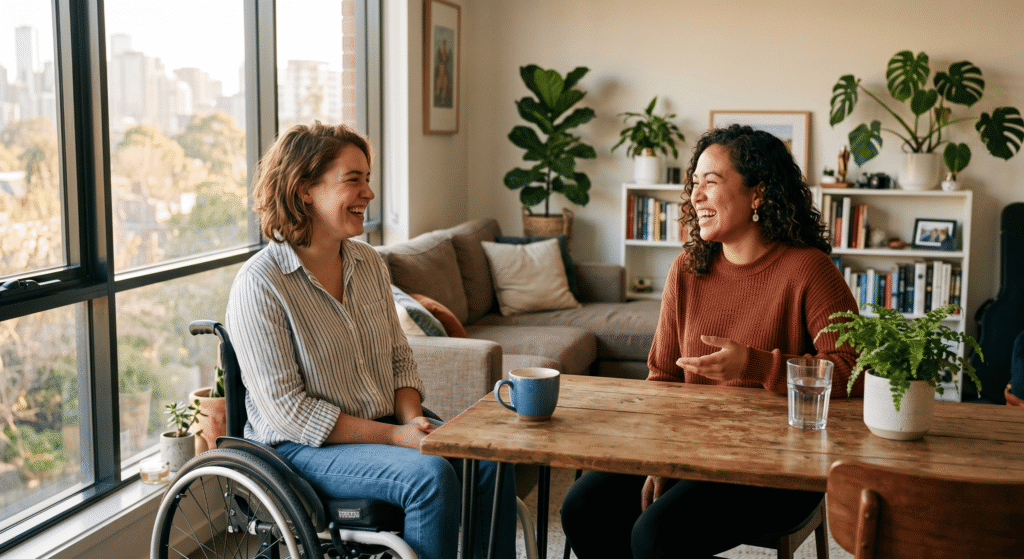
Our cooking classes for people with disabilities focus on skills that participants actually use at home every day. We do not follow a fixed programme. Every session is shaped around what the participant needs and wants to learn.
Meal Planning and Shopping
Learning to cook independently starts with planning. Participants learn how to plan simple meals, write shopping lists, compare grocery prices, choose affordable ingredients, and manage a food budget. These skills support independent living and align with many NDIS goals.
Kitchen Safety and Hygiene
Kitchen safety is part of every session. Participants learn how to use knives, ovens, and stovetops safely, store food correctly, prevent cross-contamination, and keep the kitchen clean while cooking. These habits help build confidence and reduce risks at home.
Cooking a Meal From Start to Finish
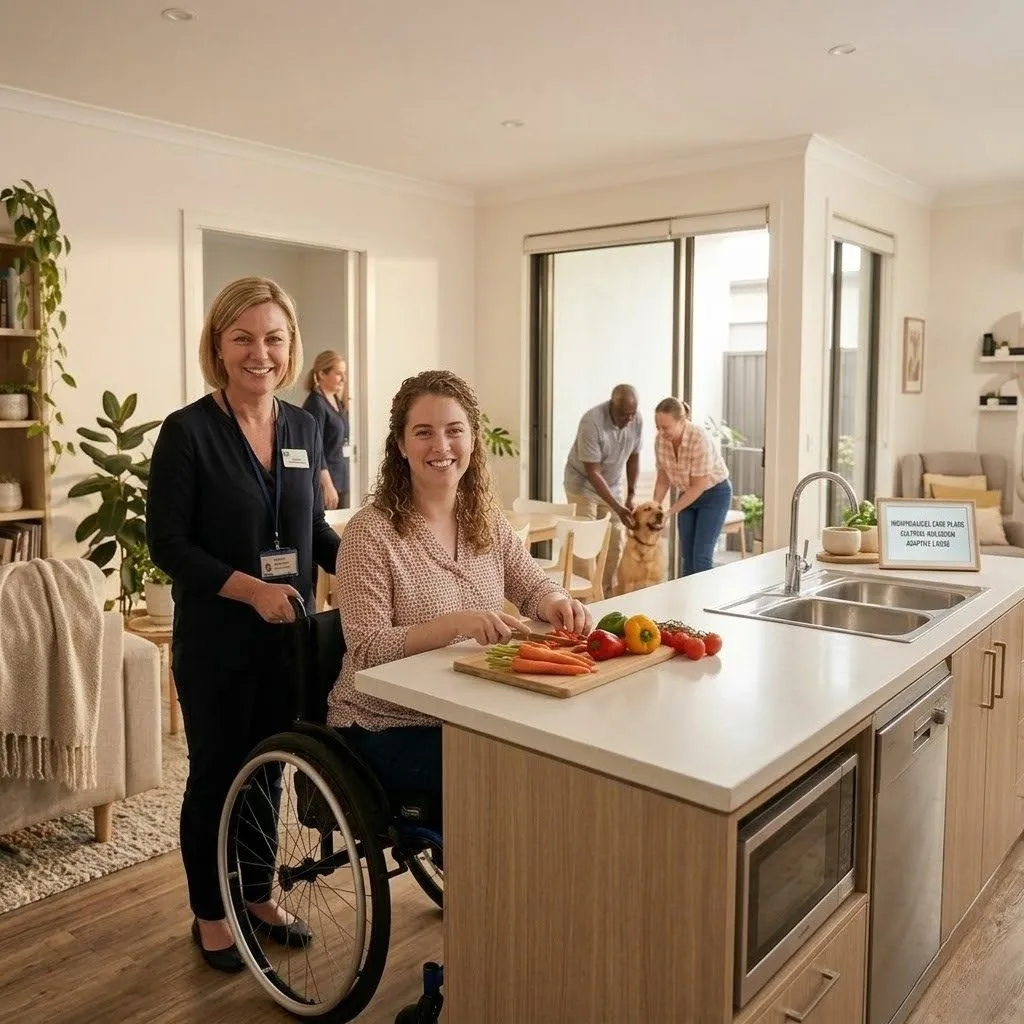
Participants choose a meal, gather ingredients, and work through the cooking process with support from a support worker. The level of assistance is adjusted to suit each person’s skills and experience. No previous cooking experience is required.
Getting More Independent Over Time
As skills improve, support is gradually reduced so participants can take on more of the cooking process independently. Progress is tracked after each session and can be used to support NDIS plan reviews.
Who Can Join Our Cooking Classes
Our disability cooking programmes in Melbourne are open to participants with many different disabilities. Before sessions start, we take time to understand each person’s goals, interests, support needs, and personality so we can set up the right programme for them.
- Participants Working Towards Living Independently: People who want to do more things on their own at home, including cooking, cleaning, and managing their daily routine without needing as much support.
- Participants With Intellectual Disability: We use simple, step-by-step instructions and go at a pace that works for each person. We repeat skills across sessions so they stick and become part of a normal routine.
- Participants With Psychosocial Disability: When someone is living with the effects of a mental health condition, cooking is one of the first things that gets hard. Our sessions help people slowly rebuild their routine and confidence in the kitchen.
- Young Adults Moving Into Independent Living: Many young people leaving school or moving out of home for the first time have never cooked for themselves. Our NDIS life skills programmes help them build that skill in a safe and supported way.
- Participants With Physical Disability: We change how sessions run to suit people with limited movement, low grip strength, or fatigue. We can use special kitchen tools, change how tasks are done, or shorten the session if needed.
How the NDIS Funds Cooking Classes
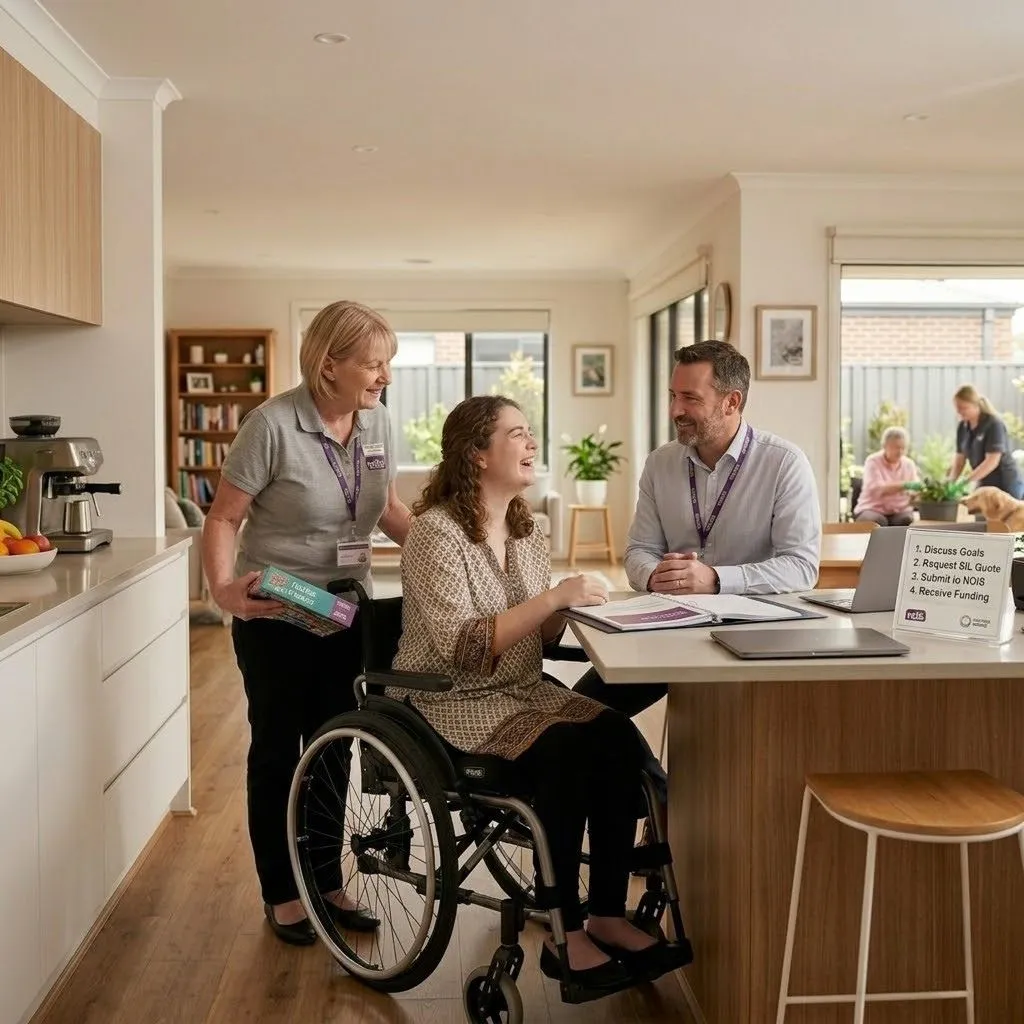
Cooking classes are usually funded through the Capacity Building budget under Improved Daily Living. This funding helps participants build practical skills and become more independent over time.
Why Cooking Classes Count as Skill Development
Cooking classes focus on building skills such as meal planning, kitchen safety, and meal preparation. Unlike everyday cooking assistance funded through Core Supports, these sessions are designed to help participants become more independent over time.
Using Both Budgets Together
Capacity Building can fund cooking skill development, while Core Supports may cover assistance with meal preparation. Depending on your plan, both budgets can be used together.
How Progress Records Support Your Plan Review
After each session, we record the skills covered, the level of support provided, and the progress made. These records can help demonstrate outcomes at NDIS plan reviews and support future funding discussions.
How Cooking Classes Help You Reach Your NDIS Goals
NDIS capacity-building activities, such as cooking classes, work best when they are linked to the goals in your NDIS plan. When sessions are aligned with your goals, the progress you make can be recorded and used during your next plan review.
For example, if your plan has a goal of living more independently, cooking classes give you real evidence that you are working towards that. Our support workers write notes after each session and track the skills you are building. This helps when you need to show the NDIA what you have achieved.
Learning to cook also helps with other parts of daily life. When you know how to plan meals and shop for food, you are also learning to manage money and time. These are all skills that help you live more independently. You can read more about how we support this through our development of life skills.
One-on-One Sessions or Group Classes
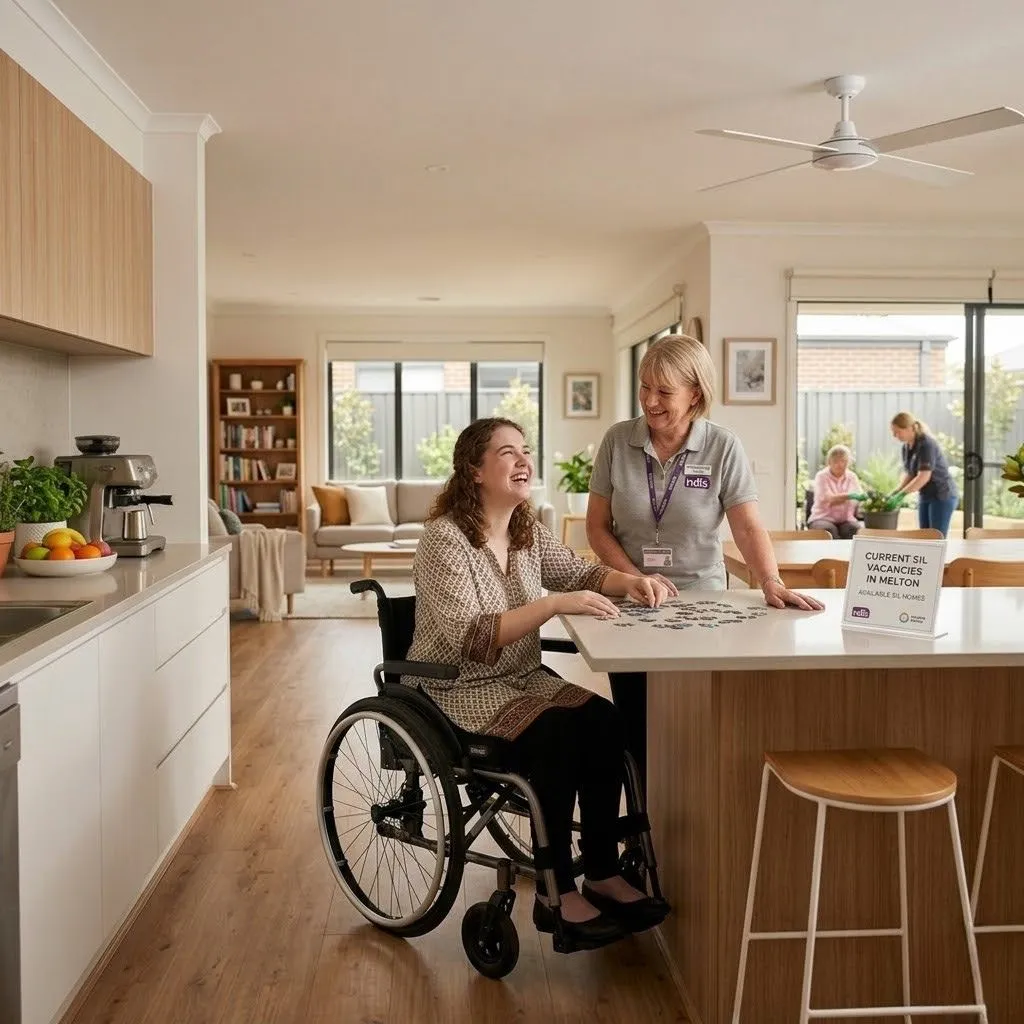
We offer NDIS cooking classes in Melbourne in the following ways. The best choice depends on your goals, your skill level, and what your plan covers.
- One-on-One Sessions: In a one-on-one session, the support worker works exclusively with you. The pace and level of help are tailored to your needs and adjusted as you improve. This approach works well for people who are just starting out, have more complex needs, or want a quieter setting to build their confidence.
- Group Cooking Classes: In a group class, a small number of participants cook together under the supervision of a support worker. Cooking with others can be motivating, and because the support worker’s cost is shared, your capacity-building funding goes further. The sessions remain focused on building cooking skills, not just socialising.
If you are not sure which option suits you, we will chat about your goals and plan before we recommend anything. Some people start with one-on-one sessions and move to group classes once they feel more confident, and we support that step when they are ready.
Where We Run Cooking Classes in Melbourne
Our NDIS cooking classes and supported cooking programmes are available across Melbourne, covering the northern, western, eastern, and south-eastern suburbs. Sessions are delivered in participants’ own homes or at local community venues, depending on what works best for the individual.
For people who find it easier to learn in a familiar environment, in-home cooking support means the skills learned apply directly to their everyday kitchen. For those who prefer getting out of the house or joining a group, community-based cooking programmes are available at accessible venues across the city.
Across Melbourne’s north, sessions run in suburbs including Preston, Coburg, and Bundoora, where shopping and budgeting activities can be incorporated as appropriate. In the southeast, we work with people in Dandenong, Springvale, and Caulfield, incorporating the food cultures and dietary practices of those communities into each session. Across Melbourne’s west, sessions run in Footscray, Hoppers Crossing, and Werribee, where participants learn to cook with locally available ingredients sourced from markets such as Footscray Market. We also cover Melton, Broadmeadows, Sunshine, Bentleigh, Craigieburn, and surrounding areas.
Why Participants Choose Our Cooking Programmes
Our cooking and life skills classes are tailored to each participant’s needs. Here is what we do differently:
- Your Goals Shape the Programme: Every programme starts with a conversation about your goals, current skills, and level of independence. Sessions are then tailored to what you want to achieve.
- Cooking Meals You Eat: Sessions are built around the meals you enjoy, taking into account your cultural background, dietary needs, and personal preferences.
- Support That Fits Your Needs: Sessions are adapted to each person’s abilities through modified techniques, adaptive kitchen tools, extra time, or shorter sessions as needed.
- A Clear Record of Progress: After each session, we record the skills covered, level of support required, and progress made. These records can support NDIS plan reviews.
- Registered and Accountable: Sessions are delivered by trained support workers and follow the NDIS Practice Standards. We are registered with the NDIS Quality and Safeguards Commission (Registration No. 4050126032).
 Posted on Google
 Omar Soliman
Trustindex verifies that the original source of the review is Google.
Really happy with the support I’m getting. Everyone is friendly, easy to talk to, and actually listens. I feel supported and comfortable. Would definitely recommend.Posted on Google WarrenI have found the services to be unbelievably great in my situation. I recommend the services to everyone who wants to be taken care of in Melbourne.Posted on Google
 Amira MoussaI’m so grateful for the care and support I receive from Hilda Care. I’ve always felt respected, valued, and genuinely listened to. The team is kind, patient, and supportive, and communication is always clear! I honestly feel lucky to be part of a service that truly cares about their clients. Thank you!!!Posted on Google
 Omar Moussa (omzy96)Lovely NDIS provider providing support throughout all of Melbourne. I have personally recieved support through Hilda Care for the past 6 months roughly. Their administration is top notch. They have gone above and beyond providing personalised support workers for my needs, have promptly resolved any issues I may have and they always try their best to deliver extra services that may help me with my needs and support. Thank you Hilda Care, you've made my transition into the NDIS as seamless as possible, and I really look forward for the years ahead 😊Posted on Google
 Grahm WatsonThanks for looking after me in SIL house in Burnside Heights. Management is excellent. Happy is looking after me very well. ThanksPosted on Google
 Kim Fleming
Trustindex verifies that the original source of the review is Google.
My experience dealing with this organisation has been very disappointing. They seem unorganised, unprofessional arrogant and downright disrespectful of peoples time.Posted on Google Divyanshu SethiHilda Care is outstanding. As a Support Coordinator, I’ve had situations where I needed a Support Worker at the very last minute for my cleints, and they delivered without hesitation. Not once or twice but always. They found the right person within hours and made sure the client felt safe and supported. They have paid heed to client’s feedback and tweaked their services accordingly everytime. Their staff are well trained, reliable, and always go above and beyond to meet client needs. It’s clear they genuinely put clients first. Highly recommended.Posted on Google
 Tommy NjegacThank you Hilda care for providing me services in caroline springs. Harry is amazing support worker. He really understands me well and my needs. God bless your company.Posted on Google
 Yasemin YakupThis is one of the most reliable and compassionate disability service providers we’ve worked with. Their communication is clear. The support workers show great understanding and patience, especially during challenging moments. They make everyday routines more enjoyable and less stressful for everyone involved. We feel very lucky to have them on our side.Verified by TrustindexTrustindex verified badge is the Universal Symbol of Trust. Only the greatest companies can get the verified badge who has a review score above 4.5, based on customer reviews over the past 12 months. Read more
Frequently Asked Questions (FAQs)
Can self-managed participants access cooking classes?
Yes. Self-managed participants can choose their own providers, pay for services directly, and claim eligible costs through the NDIS portal.
Can plan-managed participants access cooking classes?
Yes. Plan-managed participants can access cooking classes, with their plan manager handling invoices and payments on their behalf.
Are ingredients included in cooking sessions?
This depends on how the sessions are arranged. Sometimes ingredients are included, while in other cases participants purchase their own as part of learning shopping and budgeting skills.
Can cooking classes be delivered at home?
Yes. One-on-one cooking sessions can be delivered in your own kitchen, allowing you to learn in a familiar environment using your everyday equipment.
Can cooking classes support SIL goals?
Yes. Cooking classes can help participants in Supported Independent Living develop daily living skills and become more independent with meal preparation.
What skills can be learned during cooking classes?
Participants can learn meal planning, grocery shopping, budgeting, kitchen safety, food preparation, cooking techniques, food storage, and how to prepare meals independently from start to finish.
How often should cooking classes be scheduled?
The frequency depends on your goals and available funding. Weekly or fortnightly sessions are often a good way to build skills and confidence over time.
Start Building Kitchen Skills Today
Our NDIS cooking classes in Melbourne are practical, goal-directed, and open to participants at any skill level. We work with all types of plan management and all disabilities. If you are ready to start or just want to ask a question, call us today.
Cooking classes are one part of our wider development life skills support.
Phone: 1300 440 777
Email: info@hildacare.com.au
Address: Level 32, 367 Collins St, Melbourne VIC 3000