

- 53+ Reviews on Google
- Multilingual Team
- Registered NDIS Provider #4050126032
SDA Funding Explained: NDIS Prices, Rent and What You Pay in 2026–27
SDA funding helps pay for specialist disability accommodation designed for people with extreme functional impairment or very high support needs. The NDIS pays the registered SDA provider for the dwelling, while the participant pays a separate rent contribution and their ordinary living costs.
The amount of SDA funding attached to a property is not one fixed rate. For 2026–27, the NDIS sets maximum price limits based on factors including the SDA design category, building type, number of residents, property type and location.
This guide explains how SDA funding works, what the current 2026–27 price limits look like, what you pay yourself, and how SDA funding differs from SIL.


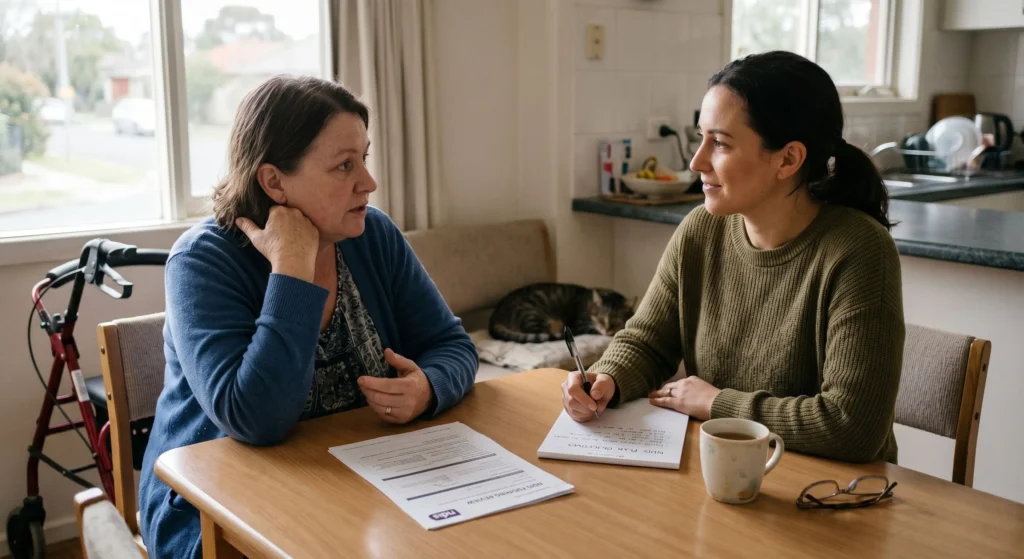
How SDA Funding Works
SDA funding is different from most everyday NDIS supports because it is attached to the specialist dwelling rather than being a budget you normally receive as cash.
The NDIS pays the SDA provider for the accommodation component of the property. You then pay the agreed Reasonable Rent Contribution and your normal household expenses.
SDA funding is intended to contribute toward the cost of providing specialist housing that meets the required SDA standards.
It does not pay for:
- Support workers
- Supported Independent Living
- Personal care
- Groceries
- Electricity and other ordinary household expenses
- Your general day-to-day living costs
In simple terms:
SDA = the specialist home
SIL = support to help you live independently
You can have SDA without SIL, SIL without SDA, or both, depending on your individual circumstances.
How Much Does SDA Pay in 2026–27?
There is no single SDA payment that applies to every participant or property.
For 2026–27, the NDIS publishes maximum annual price limits for different combinations of dwelling type, design category and occupancy. The actual price for a particular enrolled property is then affected by the applicable pricing arrangements, including its location and other property characteristics.
For example, under the 2026–27 post-2023 New Build base prices, before applicable location and other adjustments, the NDIS lists the following annual amounts per SDA-eligible resident for dwellings without on-site overnight assistance and without sprinklers:
| Building type | Improved Liveability | Fully Accessible | Robust | High Physical Support |
|---|---|---|---|---|
| Apartment – 1 bedroom, 1 resident | $87,469 | $90,255 | N/A | $98,278 |
| Apartment – 2 bedrooms, 1 resident | $92,162 | $94,225 | N/A | $102,525 |
| Apartment – 2 bedrooms, 2 residents | $39,992 | $40,971 | N/A | $45,167 |
| Villa/Duplex/Townhouse – 1 resident | $62,161 | $65,256 | $66,836 | $73,507 |
| Villa/Duplex/Townhouse – 2 residents | $36,028 | $38,278 | $41,982 | $42,603 |
| House – 2 residents | $71,719 | $73,604 | $81,938 | $87,008 |
| House – 3 residents | $50,514 | $51,899 | $56,319 | $61,577 |
| Group home – 4 residents | $41,907 | $43,459 | $47,435 | $51,045 |
| Group home – 5 residents | $35,061 | $36,496 | $40,474 | $42,836 |
These are maximum base-price examples, not guaranteed payments to a particular participant or a quote for a particular Hilda Care property. The NDIS pricing arrangements apply further adjustments depending on the property and its circumstances.
Why the Amount Can Be Different From These Figures
The table gives you a useful starting point, but the final SDA price for an enrolled dwelling can change because of factors such as:
- SDA design category
- Building type
- Number of SDA residents
- Location
- Whether the property is a New Build, Existing Stock or another applicable property classification
- On-site overnight assistance arrangements
- Sprinkler configuration
- Other pricing rules contained in the current SDA Pricing Arrangements
This is why two SDA homes with the same design category can have different NDIS funding amounts.
SDA Price Limits Are Maximums, Not a Guaranteed Payment
The figures published by the NDIS are maximum price limits for SDA supports. They are not amounts every participant automatically receives.
The price is connected to the enrolled dwelling and its applicable pricing characteristics. The NDIS SDA pricing arrangements explain the maximum amounts that can be claimed, while the SDA price calculator can be used to estimate the expected annual income for a particular enrolled SDA home. This distinction is important when comparing SDA properties.
A property with a higher maximum price limit does not mean the participant receives more money personally. SDA funding is used for the specialist accommodation.

What Determines the SDA Funding Amount?
Several parts of the property work together to determine the applicable SDA price.
1. SDA Design Category (add live links in each of these)
The four main design categories are:
- Improved Liveability
- Fully Accessible
- Robust
- High Physical Support
Each category has different design requirements and corresponding price limits.
2. Building Type
The NDIS pricing structure distinguishes between different building types, including:
- Apartments
- Villas, duplexes and townhouses
- Houses
- Group homes
The building type can significantly affect the applicable price.
3. Number of Residents
In many shared-dwelling configurations, the price is calculated on a per-participant basis.
A property designed for several SDA residents therefore does not simply receive the same amount as a single-resident dwelling multiplied by the number of rooms.
4. Property Classification and Age
The NDIS has different pricing arrangements for New Build and existing SDA stock.
This matters because a newly constructed property and an older enrolled property can have different applicable price limits.
5. Location
Location factors also affect SDA pricing. This means the same type of SDA dwelling can have a different maximum price depending on its location.
For participants, this is one reason it is better to look at the actual property rather than rely on a generic online SDA price.


What You Pay for SDA Housing
SDA funding does not mean you live in the property without paying anything yourself.
The NDIS states that participants pay a Reasonable Rent Contribution to their SDA provider, as well as their ordinary day-to-day living costs. The rent contribution is separate from the SDA funding paid by the NDIS.
Current Maximum Reasonable Rent Contribution
For the current period from 20 March 2026 to 19 September 2026, the published maximum Reasonable Rent Contribution is:
Participant situation | Maximum per fortnight |
Single participant | $516.11 |
Member of a couple – each | $327.05 |
These figures come from the current SDA pricing arrangements.
For a single participant, $516.11 per fortnight is approximately $13,419 per year if paid for 26 fortnights.
The amount is indexed and can change during the year, so the figure above is specifically the current 20 March–19 September 2026 rate.
The maximum rent contribution is separate from the SDA funding amount. A participant living in a higher-priced SDA dwelling does not simply pay a higher rent because the NDIS pays a higher SDA price for that dwelling.
What Else Do You Pay Besides Your Rent Contribution?
Your SDA arrangement can involve costs outside the NDIS SDA payment and Reasonable Rent Contribution.
These can include ordinary household and living expenses such as:
- Electricity
- Internet
- Groceries
- Personal expenses
- Other normal household costs
Your service agreement should clearly outline the exact arrangements.
The NDIS confirms that participants pay their rent contribution and other day-to-day living costs, with the rent arrangement recorded in the SDA service agreement.
SDA Funding vs SIL Funding: What Is the Difference?
When comparing SDA homes in Point Cook, look beyond availability and consider how each property fits your individual circumstances.
| SDA | SIL |
|---|---|
| Funds the specialist dwelling | Funds supported independent living support |
| Paid to the SDA provider | Funds the support service |
| Covers the specialist housing component | Covers assistance with daily living |
| Based on the approved SDA arrangement and property | Based on your individual support needs |
| Does not pay for support workers | Pays for eligible support services |
You do not automatically receive SIL because you have SDA funding. Likewise, having SIL does not automatically mean you qualify for SDA. The two supports address different needs and are assessed separately.

Who Receives SDA Funding?
The NDIS pays SDA funding to the registered SDA provider rather than giving the participant the SDA payment as a personal cash payment.
The participant then pays the agreed rent contribution directly to the SDA provider.
The NDIS also requires participants with SDA supports to have a written service agreement with their provider.
This means you should understand both sides of the arrangement before moving in:
NDIS funding → SDA provider → specialist dwelling
Participant → rent contribution + everyday living costs
Does SDA Funding Cover the Cost of the Whole Property?
No. SDA funding is a contribution toward the cost of providing specialist disability accommodation. It is not the same as the property’s market value or purchase price.
The NDIS sets maximum SDA price limits for eligible dwellings. The pricing arrangements are designed around the specialist accommodation being provided, rather than providing a participant with enough funding to purchase a home.
This is why SDA funding should not be treated as a personal housing allowance.

What Happens to SDA Funding When You Move?
SDA funding is connected to your approved SDA support and the dwelling arrangement.
If you want to move to another SDA property, you should make sure the new property matches your approved SDA requirements and the arrangements recorded in your plan.
The NDIS recommends checking that a dwelling meets your needs before entering into a service agreement.
If you’re considering a move, speak with your support coordinator, planner or other relevant NDIS contact before making commitments.
Can You Choose Any SDA Property Once You Have Funding?
No. Having SDA funding does not mean every SDA property is automatically suitable.
Your approved SDA arrangement needs to align with the property and your needs. Factors such as the design category, building type, location and the property’s actual features all matter.
The NDIS SDA Finder allows participants to search vacancies by factors including building type, design category, number of residents and price. The NDIS also notes that not every available vacancy is advertised through the Finder.
This is why it is important to inspect a property and confirm that it works for you before signing an agreement.

How to Work Out the SDA Funding for a Specific Home
If you want to know the SDA amount attached to a particular property, you need more than the design category.
You’ll need to consider:
- Design category
- Building type
- Number of SDA residents
- Property classification
- Location
- Applicable property features and pricing adjustments
The NDIS publishes an SDA price calculator for 2026–27 to estimate the expected annual income for an enrolled SDA home.
For a participant choosing a home, however, the more important question isn’t simply, “How much does this property receive?” It’s: Does this property match my approved SDA requirements and work for the way I need to live?
What Does SDA Funding Mean for You as a Participant?
For most participants, the practical picture is straightforward:
- Your NDIS plan: includes SDA funding if you’ve been approved.
- Your SDA provider: receives the SDA payment for the eligible dwelling.
- Your contribution: you pay the agreed Reasonable Rent Contribution.
- Your living costs: you remain responsible for ordinary household and personal expenses.
- Your support: SIL, personal care and other supports are funded separately according to your plan.
Understanding these separate parts makes it much easier to compare SDA homes without confusing the property’s NDIS funding with your personal housing costs.
Frequently Asked Questions About SDA Funding
How much does the NDIS pay for SDA in 2026–27?
There is no single SDA payment rate. The 2026–27 NDIS maximum price depends on the property’s design category, building type, occupancy and other applicable pricing factors. For example, a post-2023 New Build one-bedroom apartment for one SDA resident has a base maximum of $87,469 for Improved Liveability and $98,278 for High Physical Support before applicable adjustments.
Does SDA funding come directly to me?
No. SDA funding is paid to the registered SDA provider for the eligible dwelling. You pay your agreed rent contribution directly to the provider.
How much rent do I pay for SDA?
For the current period from 20 March to 19 September 2026, the maximum Reasonable Rent Contribution is $516.11 per fortnight for a single participant and $327.05 per fortnight for each member of a couple.
Does everyone in SDA pay the same rent?
The maximum contribution depends on the participant’s circumstances. For the current period, the published maximum is $516.11 per fortnight for a single participant and $327.05 per fortnight for a member of a couple.
Does SDA funding pay for SIL?
No. SDA pays for the specialist dwelling. SIL is a separate support arrangement that funds assistance with daily living.
Can I have SDA without SIL?
Yes. SDA and SIL are separate supports. Whether you need SIL depends on your individual support needs and NDIS funding.
Does SDA cover electricity and groceries?
No. SDA funding is for the specialist dwelling. Participants are responsible for ordinary living costs such as electricity, groceries and other personal expenses.
Why does one SDA home receive more funding than another?
The maximum price depends on factors such as design category, building type, occupancy, location and the property’s applicable pricing classification. This means two SDA homes can have different maximum prices even when they are in the same design category.
Does a more expensive SDA property mean I pay more rent?
No. The SDA funding amount paid for the dwelling and your Reasonable Rent Contribution are separate. Your rent contribution is subject to the applicable maximum rent rules rather than simply increasing with the property’s SDA price.
Can I choose any SDA home after receiving funding?
No. The property needs to align with your approved SDA requirements and your needs. Confirm the dwelling is suitable before signing a service agreement.
Does SDA funding expire?
SDA funding forms part of your NDIS plan and is subject to the applicable NDIS rules, planning and reassessment arrangements. It should not be treated as a permanent entitlement to a particular property or a fixed payment amount forever.
Find the Right SDA Home With Hilda Care
Understanding the funding is only the first step. The next step is finding an SDA property that matches your approved category, accessibility requirements, preferred location, and living arrangements.
Hilda Care owns and manages SDA properties and can help you understand the housing options available across our locations.
If you already have SDA funding, tell us your approved design category and what you need from your home. We’ll discuss the available options and help you understand the next steps.
Hilda Care is a registered NDIS provider (Provider Registration Number 4050126032) and provides SDA housing under the NDIS SDA framework.