

- 53+ Reviews on Google
- Multilingual Team
- Registered NDIS Provider #4050126032
Supported Independent Living in Mernda
Mernda has grown quickly in recent years, increasing local demand for stable, long-term SIL homes. For participants seeking daily support in a place of their own, Hilda Care provides supported independent living tailored to
individual needs.
As a registered NDIS SIL provider, Hilda Care supports participants in Mernda with appropriate care, suitable housemate matching, and a consistent
daily routine.



Understanding What Your SIL Funding Pays For
Supported Independent Living (SIL) funding pays for the support workers who help you at home with day-to-day tasks. That can mean personal care, cooking, taking medication on time, and staying safe through the night if your plan includes that level of care.
It does not cover rent, groceries, or utility bills. These costs are kept separate in your budget, and our team can explain how the two funding areas work together so that responsibilities are clear from the outset.
The level of support is based on what is reasonable and necessary for your circumstances. Some participants require a few hours of support each day, while others require staff on site throughout the night.
Living Independently with SIL Support in Mernda
Mernda offers practical advantages for SIL participants. Mernda railway station, the terminus of the Mernda line, is a premium station with step-free access, which supports reliable travel to appointments and activities in the city.
Mernda Junction Shopping Centre provides nearby access to groceries and services, and the Mernda Trail shared path follows the rail line toward South Morang, offering level, accessible walking and wheelchair routes. Support is structured to work alongside these local amenities.
Connecting Participants to the Local Mernda Community
Everyday life in Mernda extends beyond the home, and support is structured to maintain that connection. Support workers assist participants to reach Mernda Junction Shopping Centre, local appointments, and community activities using the Mernda Trail and nearby transport links.
This local focus helps participants stay involved in familiar routines and surroundings, which supports independence and well-being over time.

Current SIL Vacancies in Mernda
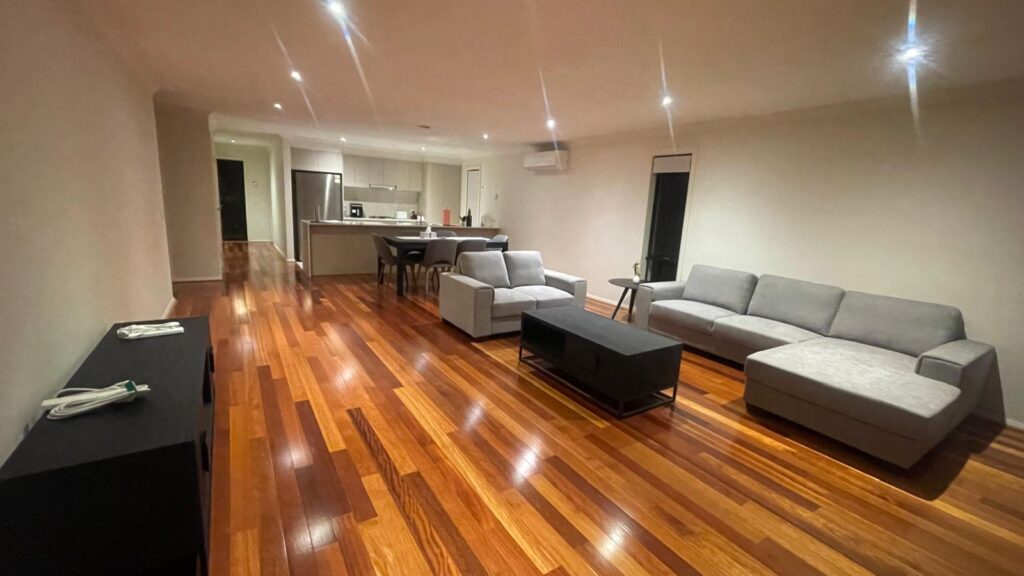
If you are looking for SIL housing in Mernda, current openings are listed below. We update vacancies as homes become available in Mernda and the nearby area.


Our Approach to SIL in Mernda
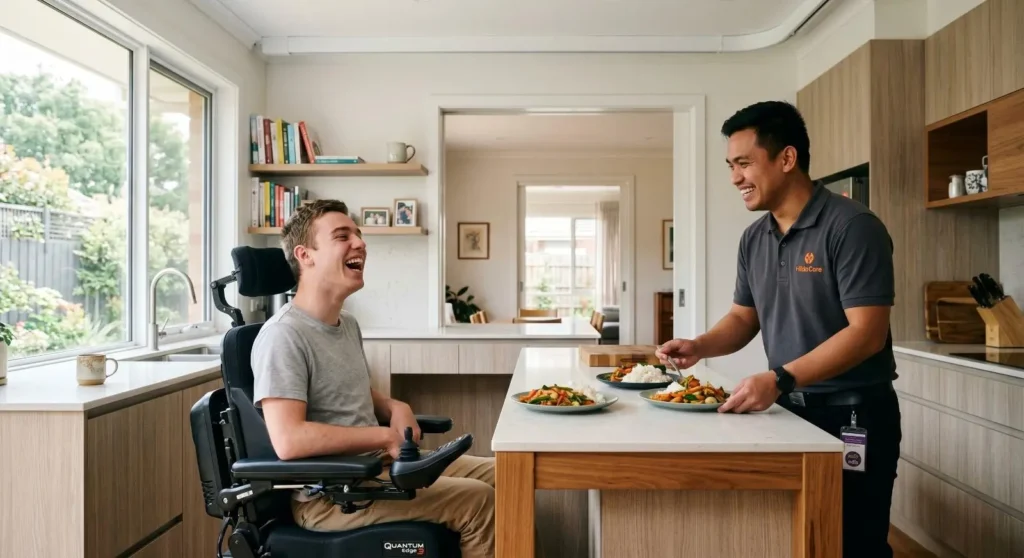
Daily support is structured around each participant’s routine, with assistance focused on the times of day when it is most needed. Core support includes:
- Personal care, including showering, dressing, and morning routines
- Medication reminders and monitoring for side effects
- Meal planning, grocery shopping, and meal preparation based on individual preferences
- Household cleaning, laundry, and general tidying
- Transport to medical appointments, shops, and social activities
- Support for community participation, including local events and groups
Multilingual Support Workers Serving Mernda
Many of our support workers speak Portuguese, Italian, Turkish, Filipino, Macedonian, English. Where a participant or family prefers to communicate in a language other than English, we match support workers accordingly, where possible.
The Difference Between SIL and SDA Funding
These two funding types are often confused, but the distinction is straightforward. One covers the home a participant lives in, and the other covers the support provided within it.
What it covers | The physical building and its accessible design features | The people who provide your day-to-day support |
Examples | Wheelchair ramps, lowered kitchen benches, widened doorways, and accessible bathrooms | Personal care, meal preparation, medication reminders, and overnight support from your care team |
What the funding pays for | The specialist home itself, built or modified for your needs | The support workers and care schedule that keep you safe at home |
Many participants receive both: SDA funds for the accessible home and SIL funds for the daily support provided within it.


Who Qualifies for SIL Funding in Mernda
SIL funding is generally for people who need a high level of daily, often overnight, hands-on help to live safely and independently. The NDIS looks at whether that level of support is reasonable and necessary for your situation.
When you meet the SIL funding eligibility criteria, the evidence usually comes from a Functional Capacity Assessment and reports from your allied health team. Our team works alongside your support coordinator to gather the medical and allied health evidence the NDIA needs to see.
Support needs can change over time, and an NDIS plan can be reviewed accordingly. If a participant’s circumstances change, a plan review can adjust their support levels.
The Process of Moving Into a SIL Home in Mernda
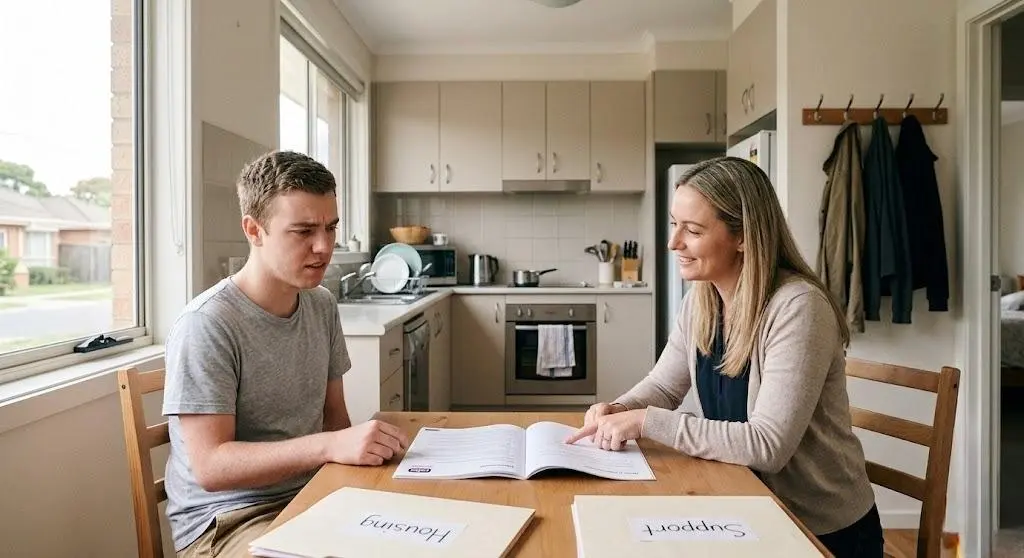
Hilda Care has supported many participants through the transition into a stable, staffed home. The process follows five steps:
Step | What Happens |
1 | Review your NDIS plan to confirm whether SIL funding is included or a plan review is needed |
2 | Match your daily support requirements to a suitable home type |
3 | Meet prospective housemates through two meet-and-greets before anyone commits to moving in, if the home is shared |
4 | Build your Roster of Care in plain language, which you review and approve before it is submitted to the NDIA |
5 | Move in, with your support team introduced gradually during a settling-in period, so routines stay stable from the start |

How Hilda Care Delivers Consistent SIL Support in Mernda
Support That Adapts as Needs and Routines Change
Our team monitors the effectiveness of each participant’s support and revises hours, tasks, and scheduling as circumstances require. This is because participant support requirements change over time, whether following a change in health, the introduction of a new goal, or an adjustment to daily routine, and the support roster is amended accordingly.
A Consistent Care Team Familiar With Each Participant’s Routine
We assign support through consistent care teams, ensuring that the same workers maintain familiarity with each participant’s preferences, medication, and daily patterns. This continuity matters because frequent changes in support staff can disrupt established routines, and stable teams support participant safety, reliability of care, and a settled home environment.
Why NDIS Participants and Families in Mernda Choose Hilda Care
Hilda Care has been a registered provider for years, independently audited, and operating in line with the NDIS Practice Standards. This established record reflects a consistent history of compliant, audited service delivery.
Participants consistently value the same elements of our service: stable care teams familiar with their routines, careful housemate matching, and transparent billing. Our disability support services extend beyond SIL, allowing support to expand as needs change.

Suburbs Near Mernda We Also Cover for SIL
Hilda Care also delivers SIL in the suburbs surrounding Mernda within the City of Whittlesea, including Doreen to the west, South Morang to the south, and the growing communities of Wollert and Yan Yean to the north.
Our team also supports participants in Plenty and the nearby district, where families frequently access services and shared homes in the Mernda area.
 Posted on Google
 Omar Soliman
Trustindex verifies that the original source of the review is Google.
Really happy with the support I’m getting. Everyone is friendly, easy to talk to, and actually listens. I feel supported and comfortable. Would definitely recommend.Posted on Google WarrenI have found the services to be unbelievably great in my situation. I recommend the services to everyone who wants to be taken care of in Melbourne.Posted on Google
 Amira MoussaI’m so grateful for the care and support I receive from Hilda Care. I’ve always felt respected, valued, and genuinely listened to. The team is kind, patient, and supportive, and communication is always clear! I honestly feel lucky to be part of a service that truly cares about their clients. Thank you!!!Posted on Google
 Omar Moussa (omzy96)Lovely NDIS provider providing support throughout all of Melbourne. I have personally recieved support through Hilda Care for the past 6 months roughly. Their administration is top notch. They have gone above and beyond providing personalised support workers for my needs, have promptly resolved any issues I may have and they always try their best to deliver extra services that may help me with my needs and support. Thank you Hilda Care, you've made my transition into the NDIS as seamless as possible, and I really look forward for the years ahead 😊Posted on Google
 Grahm WatsonThanks for looking after me in SIL house in Burnside Heights. Management is excellent. Happy is looking after me very well. ThanksPosted on Google
 Kim Fleming
Trustindex verifies that the original source of the review is Google.
My experience dealing with this organisation has been very disappointing. They seem unorganised, unprofessional arrogant and downright disrespectful of peoples time.Posted on Google Divyanshu SethiHilda Care is outstanding. As a Support Coordinator, I’ve had situations where I needed a Support Worker at the very last minute for my cleints, and they delivered without hesitation. Not once or twice but always. They found the right person within hours and made sure the client felt safe and supported. They have paid heed to client’s feedback and tweaked their services accordingly everytime. Their staff are well trained, reliable, and always go above and beyond to meet client needs. It’s clear they genuinely put clients first. Highly recommended.Posted on Google
 Tommy NjegacThank you Hilda care for providing me services in caroline springs. Harry is amazing support worker. He really understands me well and my needs. God bless your company.Posted on Google
 Yasemin YakupThis is one of the most reliable and compassionate disability service providers we’ve worked with. Their communication is clear. The support workers show great understanding and patience, especially during challenging moments. They make everyday routines more enjoyable and less stressful for everyone involved. We feel very lucky to have them on our side.Verified by TrustindexTrustindex verified badge is the Universal Symbol of Trust. Only the greatest companies can get the verified badge who has a review score above 4.5, based on customer reviews over the past 12 months. Read more
Frequently Asked Questions (FAQs)
How much does SIL funding cost, and what determines the amount?
SIL funding varies based on your assessed support needs, overnight care requirements, and whether you live in a shared or individual setting. The NDIA sets the amount based on your disability support needs, usually evidenced by a Functional Capacity Assessment.
Can I receive SIL funding if I want to live alone?
Yes. SIL is not limited to shared homes, and funding can be approved for living alone where your support needs justify it, though shared arrangements are more common.
Does SIL funding cover support if I work or study during the day?
Only one type of support can be claimed across 24 hours. Time at work, at school, or in the community is generally covered by other parts of your plan, with SIL covering support at home.
Can my family provide some of my support alongside SIL?
Yes. Family can provide informal support alongside SIL, but it is not intended to replace funded support delivered by a registered provider staffed by qualified professionals.
What support ratio will I receive in a SIL home?
The support ratio describes how many participants share a support worker, such as one-to-one or one worker to three residents. It depends on your assessed needs and directly affects how your funding is calculated.
Who helps me find and apply for a SIL placement?
A support coordinator usually helps you find a provider and arrange supports within your plan. Our team works alongside them to gather evidence, prepare your Roster of Care, and coordinate your move.
Speak to Our Team About SIL in Mernda
Choosing a SIL provider is an important decision. For participants considering their options in Mernda, the next step is to discuss individual needs and available support.
Our team can explain funding, accommodation types, and how a transition is managed, and provide clear information based on your circumstances.
Contact our team to discuss the next steps.