

- 53+ Reviews on Google
- Multilingual Team
- Registered NDIS Provider #4050126032
Level 2 Autism: What Requiring Substantial Support Means
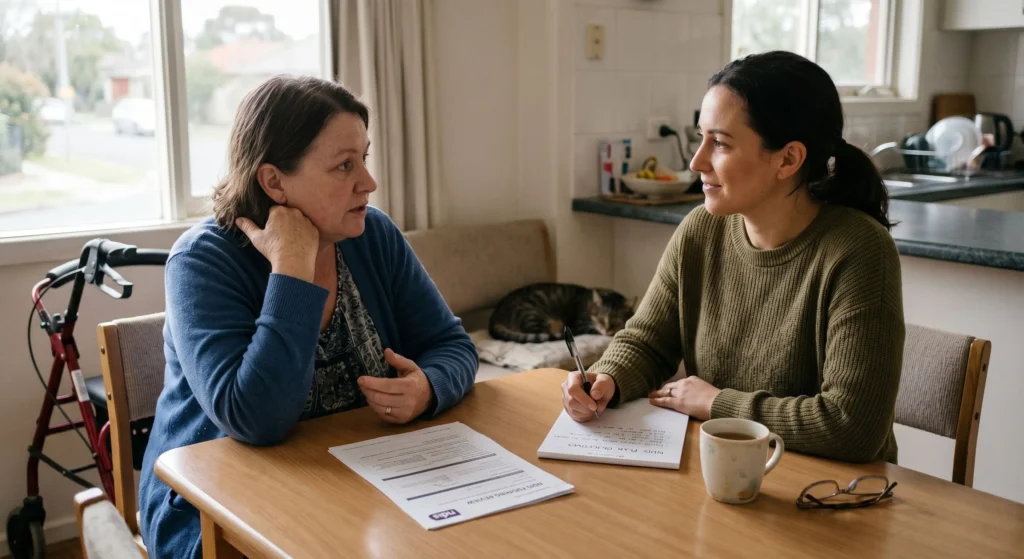
Level 2 autism means a person needs substantial support in areas affected by autism. Communication, social interaction, routines, change or everyday activities may require regular assistance, but the exact needs are different for every person.
This page explains what Level 2 autism means, how it can look in children and adults, how it is assessed in Australia, and how it relates to NDIS access and funded support.

What Does Level 2 Autism Mean?
Level 2 is one of the three support levels used in the DSM-5-TR autism framework:
- Level 1 – Requiring support
- Level 2 – Requiring substantial support
- Level 3 – Requiring very substantial support
For Level 2, autism-related differences have a clear effect on everyday functioning and substantial support is required.
Clinicians consider two main areas: social communication and interaction, and restricted or repetitive behaviours, interests and difficulty with change.
A person can have different support levels across these two areas. For example, their social communication needs may be assessed differently from their need for support around change or repetitive behaviours.
Level 2 also does not tell you whether someone speaks, has an intellectual disability, can work, can live independently, or needs support 24 hours a day. Those needs must be understood individually.
Common Signs and Support Needs in Level 2 Autism
Level 2 autism is often more noticeable in everyday life than Level 1 because the person continues to need substantial assistance even when some support is already available. Common areas of difficulty can include:
- Significant difficulty starting or maintaining social interaction
- Communication that works differently from what others expect
- Needing more support to understand or respond in social situations
- Strong reliance on routines and predictable activities
- Significant distress when plans or environments change
- Repetitive behaviours or focused interests that affect everyday activities
- Sensory needs that make some environments difficult to manage
- Needing regular prompting, structure or assistance with daily activities
- Difficulty moving between tasks or coping with several demands at once
Not every Level 2 autistic person experiences all of these in the same way. One person may need more support with communication. Another may find change and sensory demands much harder. Someone else may require regular assistance across several areas of daily life.

How Level 2 Autism Can Look in Children and Adults
Level 2 Autism in Children
In children, Level 2 support needs can become clear across communication, play, school routines, and everyday activities.
A child may find it difficult to join group activities, respond to other children, cope with unexpected changes or move between activities without support.
They may communicate through speech, AAC, visual supports, gestures or a combination of methods. Communication ability can also vary depending on the situation and how comfortable or overwhelmed the child feels.
School environments may require additional structure around transitions, communication, sensory demands and participation. A child might understand academic work well but need substantial support to manage the wider demands of the school day.
The Level 2 label does not tell parents exactly what their child will or will not be able to do. It identifies a substantial need for support while leaving room for individual strengths and differences.
Level 2 Autism in Adults
Level 2 autistic adults also have very different levels of independence. Some work, study or live with a degree of independence while receiving regular disability or informal support. Others need assistance across more parts of everyday life.
Difficulties may become clearer around communication, managing change, planning activities, social situations, household routines or getting out into the community.
An adult may communicate verbally but find conversations and social situations difficult to manage without support. Another may use AAC or another communication system.
Level 2 does not automatically mean someone needs 24-hour care. The amount of daily support depends on the individual rather than the diagnosis alone.

Level 2 Compared With Level 1 and Level 3 Autism
The three autism levels describe different amounts of support, not three fixed types of autistic people.
| Area | Level 1 | Level 2 | Level 3 |
|---|---|---|---|
| DSM description | Requiring support | Requiring substantial support | Requiring very substantial support |
| Social communication | Support is needed for noticeable difficulties | Marked difficulties remain even with support | Very substantial support is needed |
| Change and repetitive behaviours | Difficulties interfere with some parts of daily life | Difficulties have a stronger effect across different situations | Difficulties have a very significant effect on functioning |
| Overall support | Support | Substantial support | Very substantial support |
The boundaries are not decided by one skill or characteristic. Someone does not become Level 2 simply because they use AAC, struggle with sensory overload or need help with personal care. A clinician considers the wider autism presentation and the level of support required.
Read Level 1 Autism or our dedicated Level 3 Autism page for more detail.

How Level 2 Autism Is Assessed in Australia
Australia has a National Guideline for the Assessment and Diagnosis of Autism, with the current second edition published in 2023.
Autism assessment can use recognised frameworks including DSM-5-TR and ICD-11. The Level 1, 2 and 3 wording specifically comes from the DSM severity system. Assessment looks at the person’s development and current life rather than relying on one autism test.
- Development and history: The assessment considers how the person has communicated, interacted, managed change and experienced everyday situations over time.
- Current strengths and difficulties: The clinician looks at social communication, restricted or repetitive behaviours, interests, sensory experiences and everyday functioning.
- Information from different settings: For a child, information may come from home and school. For an adult, work, relationships and daily living can provide important context.
Standardised assessment tools may form part of the process, but the diagnosis is based on the full assessment and clinical judgement.
Level 2 Autism and NDIS Access
Level 2 autism is included on the NDIS List A of conditions that are likely to meet the disability requirements when the diagnosis meets the listed criteria.
The current List A wording covers autism assessed as Level 2 or Level 3 under the specified DSM criteria and diagnosed by the listed appropriately qualified clinicians. That makes the NDIS access position different from Level 1 autism.
However, List A should not be described as automatic NDIS eligibility. A person still needs to meet the other NDIS access requirements that apply to them, including age and residence requirements.
List A also does not decide:
- The amount of NDIS funding someone receives
- Which supports appear in their plan
- How many hours of support they receive
- Whether SIL will be funded
- Whether a particular therapy or piece of equipment will be approved
Those decisions depend on the person’s individual disability-related needs.
What Can an NDIS Plan Include for Level 2 Autism?
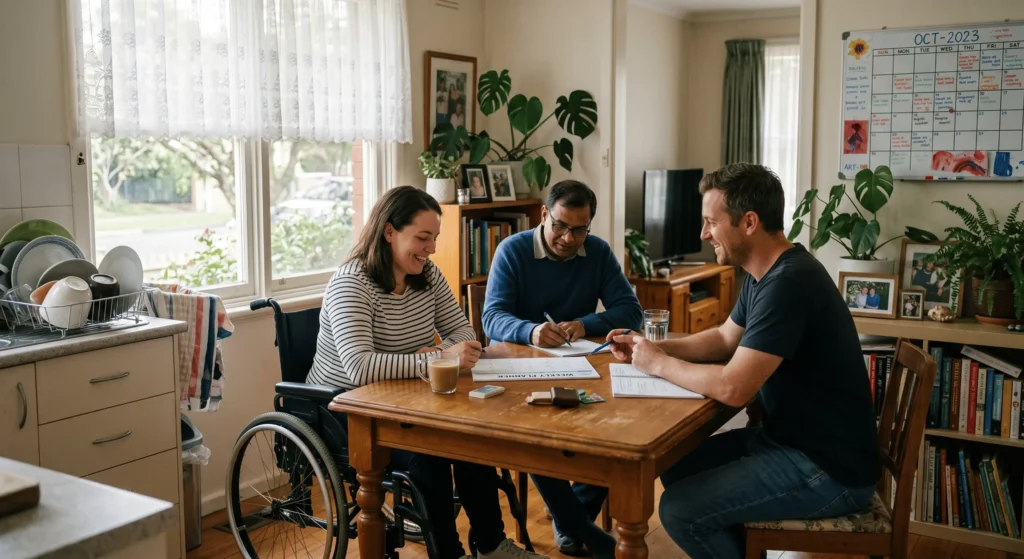
There is no standard Level 2 autism NDIS plan. Two people with the same diagnosis may need completely different supports because their communication, daily living, sensory, social, and independence needs are different. Current NDIS plans can contain four types of support budgets:
| Support Budget | What It Can Cover |
|---|---|
| Core Supports | Everyday disability support such as personal care, household assistance and support to take part in social or community activities |
| Capacity Building Supports | Supports that build skills and independence, such as occupational therapy, speech therapy, behaviour supports or employment-related support when approved |
| Capital Supports | Higher-cost assistive technology, equipment or home modifications when required |
| Recurring Supports | Regular payments for approved recurring supports, including certain transport funding |
Not every participant receives funding in all four budgets.

Daily Living Support
Some Level 2 participants need regular support with personal care, household activities, meals, routines or getting out into the community. The amount of assistance depends on what the participant manages independently and where disability support is needed.
Therapy and Skill-Building Supports
An NDIS plan may include approved supports such as occupational therapy or speech therapy when they relate to the participant’s disability needs. Other capacity-building supports may focus on communication, daily living skills, employment or behaviour support.
Assistive Technology and Communication
Some participants use communication devices, apps or other assistive technology to support everyday life. The type of equipment and how it is funded depends on the item, the participant’s needs, and what has been approved in the plan.
The autism level itself does not guarantee any particular support.
Functional Evidence Still Matters After NDIS Access
List A can make the disability-requirement part of access clearer, but the diagnosis alone does not explain what support someone needs in their plan. Functional evidence gives the NDIS a better picture of everyday life.
Useful evidence may explain:
- What the participant needs help with
- How often assistance is required
- Communication support needs
- What happens when routines or environments change
- Daily living activities that require prompting, supervision or hands-on help
- How disability affects participation at home, school, work or in the community
- What supports are already being provided
- What the participant wants to work towards
For example, two Level 2 participants may both have substantial support needs but require completely different assistance.
One might need more support with communication and community participation. Another might need regular assistance with personal care and daily living. That is why good functional evidence matters when the plan is being developed or reviewed.

Can Level 2 Autism Support Needs Change Over Time?
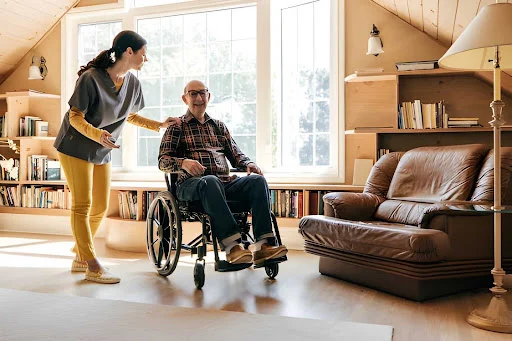
Yes. Autism is lifelong, but the amount of support a person needs can change.
A child’s needs may look different as school becomes more demanding. An adult may need more support after moving out of home, starting work, or taking on more responsibility.
New skills, better communication tools or a more suitable environment can also change how much support is needed in particular areas.
If an older assessment no longer reflects the person’s current presentation, a qualified clinician can advise whether reassessment is useful.
A change in autism level does not automatically change an NDIS plan. NDIS funding continues to be based on the participant’s current disability-related support needs.
Frequently Asked Questions About Level 2 Autism
Is Level 2 autism the same as moderate autism?
“Moderate autism” is not the formal DSM-5-TR description. Level 2 is described as requiring substantial support.
Does Level 2 autism automatically qualify for the NDIS?
No. Qualifying Level 2 autism is on NDIS List A, which means it is a condition likely to meet the disability requirements. The person still needs to meet the other applicable NDIS access requirements.
Does Level 2 autism mean someone cannot live independently?
No. Some Level 2 autistic people live with a degree of independence while receiving regular support. Others need much more assistance. Living arrangements depend on the person’s actual support needs.
Does Level 2 autism mean someone is non-speaking?
No. Some Level 2 autistic people use speech, while others use AAC, visual communication, gestures, or different combinations of communication methods.
Does Level 2 autism mean intellectual disability?
No. Autism level and intellectual ability are separate. An autistic person can have an intellectual disability, but Level 2 itself does not tell you their intellectual ability.
Can someone have Level 2 in one area and another level in the other autism domain?
Yes. DSM severity is considered separately across social communication/social interaction and restricted or repetitive behaviours.
Is there a set NDIS funding amount for Level 2 autism?
No. There is no fixed Level 2 autism budget. Funding depends on the participant’s individual disability-related needs and the supports approved in their plan.
Can someone with Level 2 autism receive Supported Independent Living?
Yes, if SIL is appropriate for the participant’s disability-related support needs and is funded in their NDIS plan. Autism Level 2 by itself does not automatically result in SIL funding.
NDIS Support for Autistic Participants in Melbourne
A Level 2 diagnosis describes substantial support needs, but the actual disability support still needs to be based on the individual.
Hilda Care provides NDIS autism support in Melbourne across personal care, life skills, community participation, Supported Independent Living, household tasks, respite and transport.
Support is based on the participant’s funded needs, communication and everyday support requirements rather than applying one package to everyone with a Level 2 diagnosis.
Registered NDIS Provider – 4050126032
